Painting the exterior of a house is a significant task that not only enhances the aesthetic appeal but also plays a crucial role in protecting the structure from the elements. Safety is a paramount concern when undertaking this sort of project, especially when it comes to reaching those high and tough-to-get places. This is where scaffolding may come into play. But do you really need it?
In this guide, we will walk you through the circumstances in which scaffolding is necessary for outside house painting, and when it might be possible to go without.
Assessing Your Needs
When determining whether you need scaffolding for painting the exterior of your house, consider the following:
- Height: How tall is your house? If you’re dealing with a multi-story building, scaffolding provides a stable platform that is much safer than ladders for reaching high areas.
- Scale of Project: Are you painting the entire exterior or just touching up a few areas? For small projects, a ladder might suffice.
- Safety: Regardless of height, your safety is critical. Scaffolding provides better balance and freedom of movement, which can reduce the risk of falls.
- Duration: If the job will take several days or involves multiple painters, scaffolding can be more efficient and less fatiguing than moving ladders around.
If you answer affirmatively to any of these considerations, scaffolding may be the right choice for your painting project.
Types of Scaffolding
There are different types of scaffolding that might be suitable for your project:
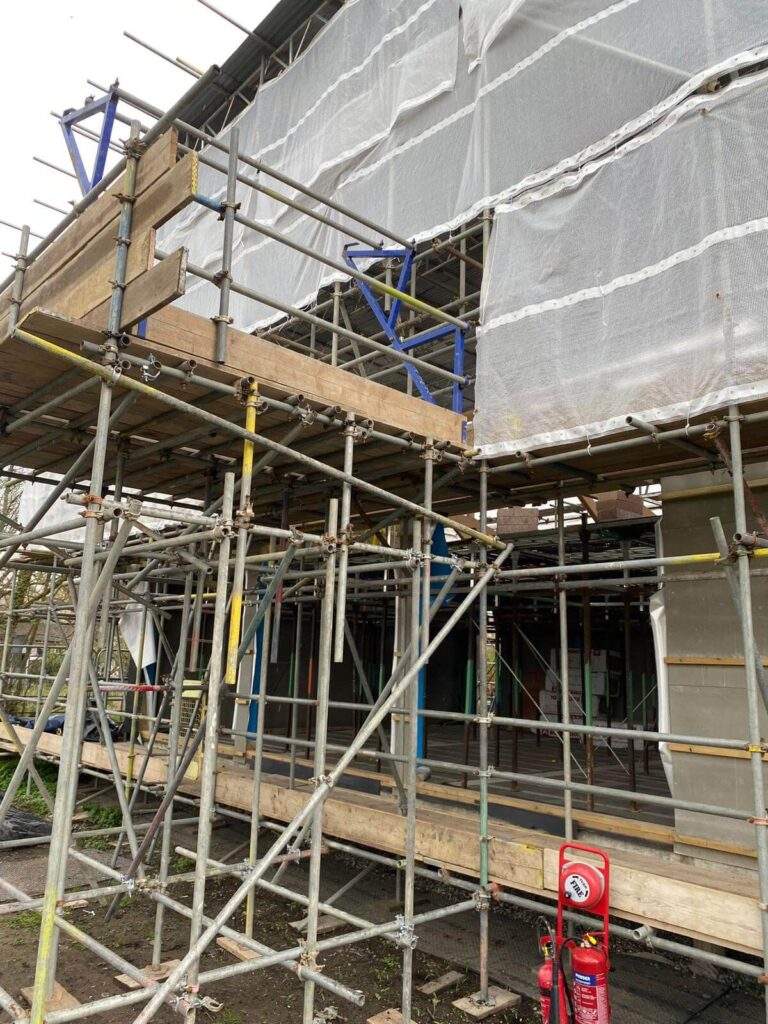
- Supported scaffolding: The most common type, consisting of one or more platforms supported by outrigger beams, brackets, poles, legs, uprights, posts, or frames.
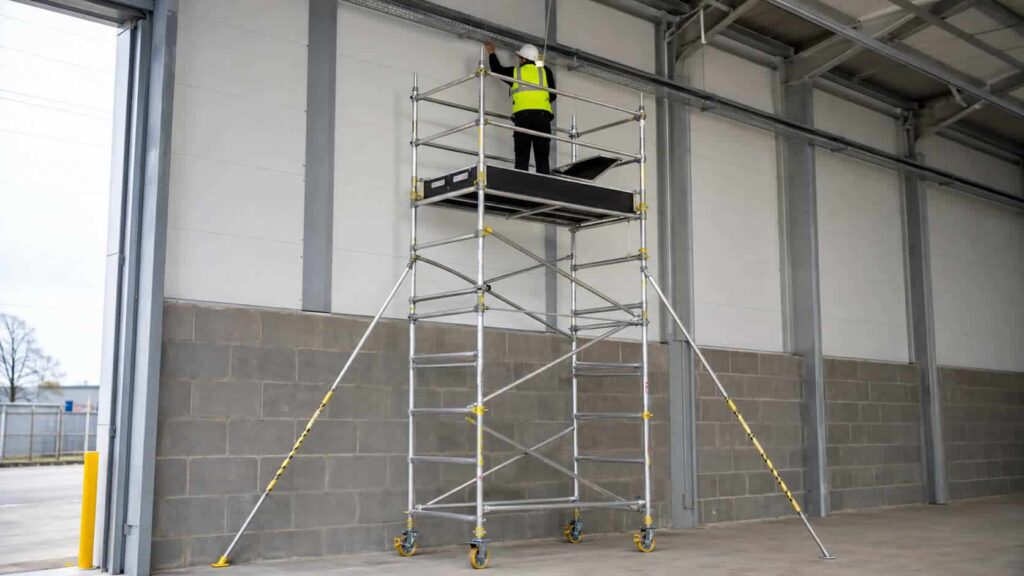
- Mobile scaffolding: Portable scaffolding on wheels, suitable for jobs requiring movement along a large surface.
- Adjustable scaffolding: Motorised or manual systems that can be adjusted to various heights.
Choose the type that best suits the access challenges of your house.
Safety First
When using scaffolding:
- Always follow the manufacturer’s guidelines for assembly and use.
- Ensure the ground is level and stable before erecting scaffolding.
- Use safety harnesses and other personal protective equipment as needed.
- Never exceed the weight limits specified for the scaffolding you’re using.
- Inspect the scaffolding regularly for any signs of damage or wear.
Hiring a Professional vs. DIY
- If you’re not experienced in scaffolding assembly and usage, consider hiring professionals. They can install and dismantle the scaffolding safely and quickly.
- If you choose DIY, rent scaffolding from reputable suppliers who provide set-up instructions and follow them meticulously.
Permits and Regulations
- Check with your local authorities to see if you need a permit to erect scaffolding around your property.
- Adhere to any community or city regulations regarding scaffolding to avoid fines or delays.
Quick Tips
Whether or not you need scaffolding to paint the outside of your house depends on several factors:
Size and height of your house:
- One-story houses: For single-story houses, you might be able to reach most areas with a sturdy ladder and extension poles, eliminating the need for scaffolding.
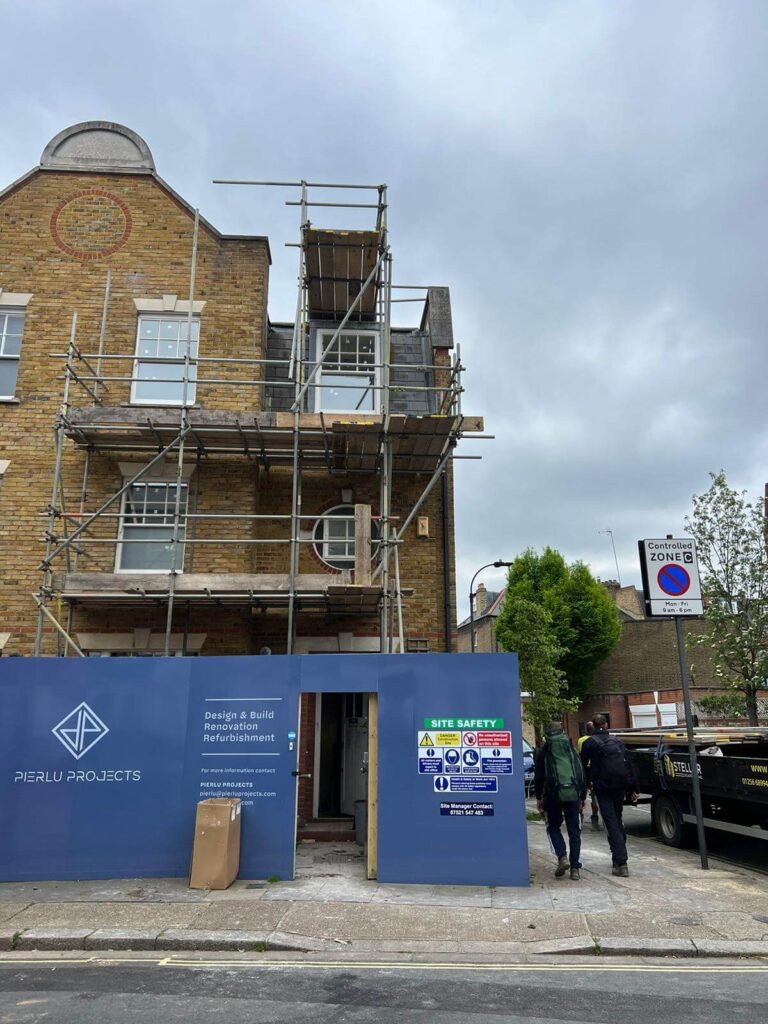
- Two-story or taller houses: Scaffolding becomes more necessary for houses with multiple stories or difficult-to-reach areas like gables or high peaks.
Your comfort level and safety:
- Comfortable with heights: If you’re comfortable working on ladders and have experience safely manoeuvring them, you might be able to manage without scaffolding for some areas.
- Prioritise safety: If you’re unsure about working on ladders at heights or prioritise safety above all else, scaffolding is a safer option.
The complexity of the project:
- Simple painting: For straightforward painting projects involving easily accessible areas, ladders and extension poles might suffice.
- Detailed work: Scaffolding projects involving intricate details, multiple stories, or uneven surfaces might benefit greatly from the stability and accessibility offered by scaffolding.
Alternatives to scaffolding:
- Extension ladders: For some single-story houses, sturdy extension ladders with proper safety measures can reach most areas.
- Mobile work platforms: These offer similar benefits to scaffolding but on a smaller scale and might be suitable for specific areas.
- Hiring professionals: Professional painters often have their own scaffolding and expertise, ensuring safety and efficiency.
Ultimately, the decision depends on your specific situation and comfort level. Prioritising safety is crucial, so if you’re unsure or uncomfortable with ladders, opting for professional help or using scaffolding is always the safer choice.
Indoor Scaffolding For Painting
Indoor scaffolding for painting is an invaluable asset for both professional and DIY projects when it comes to transforming the walls and ceilings of any interior space. By providing a stable, flexible platform, scaffolding allows painters to safely reach high areas without the constant need to reposition ladders. This efficiency not only saves time but also reduces the risk of accidents or injuries.
Furthermore, scaffolds can be adjusted to various heights and configurations, accommodating the unique shapes and sizes of different rooms. With their robust structure, these systems offer a secure foothold, which is essential for achieving precise and meticulous paintwork on indoor surfaces.
Whether tackling a commercial renovation or simply refreshing your living space, indoor scaffolding is a practical and efficient solution that ensures even the most challenging painting jobs are done with ease and to the highest standard.
Scaffolding For External House Painting
When tackling an external house painting project, the safety and ease provided by scaffolding cannot be overstated. Scaffolding offers a stable platform for painters to work at various heights, ensuring that every inch of a home’s exterior can be reached and painted with precision. Not only does it allow for a smoother, more uniform application of paint, but it also greatly reduces the risks associated with working from ladders.
Properly installed scaffolding enables efficient movement along the outside of the building and provides enough space for tools and paint cans, which increases productivity. For any exterior house painting job, investing in quality scaffolding is a decision that pays dividends in both the quality of the paint job and the safety of the workers.
Which Type Of Scaffolding Is Used For Plastering?
When it comes to plastering, the most commonly used type of scaffolding is known as “single scaffolding,” also referred to as “brick layer’s scaffolding.” Single scaffolding is typically used for brick masonry and is therefore suitable for plastering as well. It consists of a single framework of standards, ledgers, and putlogs which are positioned parallel to the wall at a distance of about 1.2 meters.
Standards are vertically spaced at approximately 2 to 2.5 meters and connected by ledgers at a vertical interval of approximately 1.2 to 1.5 meters. Putlogs are then placed at intervals, extending out from the wall, which are supported on the ledgers and held in place by the holes left in the wall by removing bricks. This setup provides a stable platform for workers to carry out plastering tasks efficiently and safely.
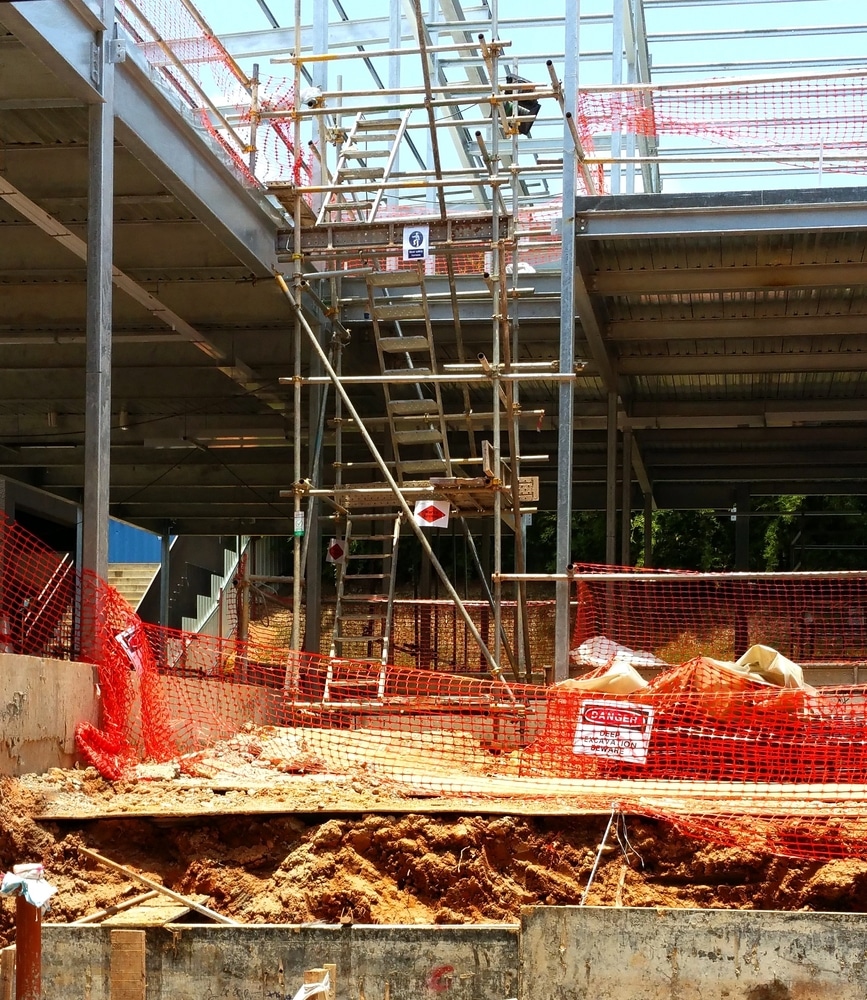
However, for more extensive or high-rise projects, tube and coupler scaffolding might be employed, offering greater strength and flexibility.
How Do You Safely Decorate With Scaffolding?
When decorating with scaffolding, safety is paramount. To ensure a secure environment, it’s crucial to begin by selecting a scaffold of appropriate size and strength for the task.
It should comply with industry standards and be erected on solid, level ground for stability. Prior to use, a thorough inspection by a competent person should ascertain that the scaffolding is free of defects and assembled according to manufacturer guidelines. While decorating, workers should access the platforms using the built-in ladders or stairs with handrails, never scaling the sides.
Scaffolding should be equipped with safety features such as guardrails, toe boards, and non-slip decking to prevent falls and injuries. It’s also essential to avoid overloading the scaffold with materials and to use tool lanyards to prevent dropped objects from becoming hazardous. Throughout the decorating process, wearing personal protective equipment, such as hard hats and slip-resistant shoes, adds an extra layer of protection.
Understanding and adhering to these safety protocols can ensure that the use of scaffolding in your decorating project is both effective and secure.
Conclusion
Deciding on the use of scaffolding for painting your house outside is a matter of safety, scale, and efficiency. Assess the height and scope of your project, and always err on the side of caution. Remember that while scaffolding can be a significant additional expense, the stability and security it provides can be invaluable.
If in doubt, consult with professional painters or scaffolding experts. They can offer advice tailored to your specific needs and help ensure that your painting project is completed safely and successfully.
If you are searching for Scaffolders in Southampton and surrounding areas, contact Stellar Scaffolding for more information.