
Scaffolding Newbury
Scaffolding Newbury – Safe Access for Homes, Commercial Buildings and Rural-Site Projects
Scaffolding in Newbury often needs to work across a varied mix of sites, from town-centre properties and residential streets to rural homes, business parks, schools, farms, listed buildings and contractor-led developments. Stellar Scaffolding provides safe, practical scaffold access for homeowners, builders, landlords, property managers and commercial clients who need a structure planned around the real conditions on site.
Newbury projects can involve different challenges from one job to the next. A scaffold for a roof repair on a period cottage, a shopfront refurbishment in the town centre, a school maintenance project, a modern home extension or a commercial unit near a business park will all need different access planning. The scaffold should suit the building, the surface below, the trades using it and the surrounding area.
A well-planned scaffold gives workers a secure platform while helping to protect entrances, driveways, gardens, neighbouring boundaries, public routes and the building itself. It also helps avoid unsafe ladder work and gives trades the space they need to complete repairs, installations and refurbishment work properly.
Good scaffold planning can support:
- Safe access to awkward rooflines — Chimneys, valleys, dormers, gables and upper-level gutters can be reached from stable working platforms.
- Protection for homes and grounds — Driveways, paths, lawns, garden walls, lower roofs and outbuildings can be considered before scaffold is installed.
- Town-centre project control — Scaffolds near shops, pavements, offices or public routes need clear boundaries and careful installation planning.
- Better support for contractors — Builders, roofers, decorators, window teams and maintenance contractors can use platforms positioned for the work rather than improvised access.
- Flexible arrangements for longer works — Refurbishments, extensions and planned maintenance may need scaffold adaptations as different trades move through the project.
For older or architecturally sensitive buildings, Stellar Scaffolding can provide careful scaffolding for heritage and listed building work, helping trades reach delicate elevations while keeping protection and access under control.
Professional Scaffolding Services in Newbury
Our scaffolding services in Newbury are planned around the type of work, the condition of the site and how people will use the building while the scaffold is in place. A short repair may only require a compact access scaffold, while a larger building project may need several elevations, bridging, protection, loading points or a structure that can be adapted during the programme.
Before scaffold is erected, the property should be assessed properly. Ground conditions, access routes, overhead obstructions, lower roofs, public areas, neighbouring boundaries, site parking and material movement can all affect how the scaffold should be designed.
Scaffolding may be needed for:
- Roof repairs and replacements — Safe platforms for tile work, slate repairs, leadwork, ridges, valleys, gutters, fascias, soffits and dormers.
- Chimney and high-level maintenance — Access for stacks, flashing, repointing, flaunching, inspection and upper-level masonry repairs.
- External property improvements — Scaffold for rendering, painting, cladding, window replacement, timber repairs, cleaning and façade maintenance.
- Extensions and conversions — Access for builders working on rear extensions, side additions, loft conversions, roof alterations and external finishing work.
- Commercial repairs and planned works — Safe access for offices, shops, schools, hospitality premises, managed buildings and business units.
- Roofline protection and access — Where gutter lines, eaves or upper edges need safer working boundaries, edge protection scaffolding for safer high-level work can help create a more secure working area.
The safest scaffold is the one that fits the building, the work sequence and the people who need to use the site while the project is underway.
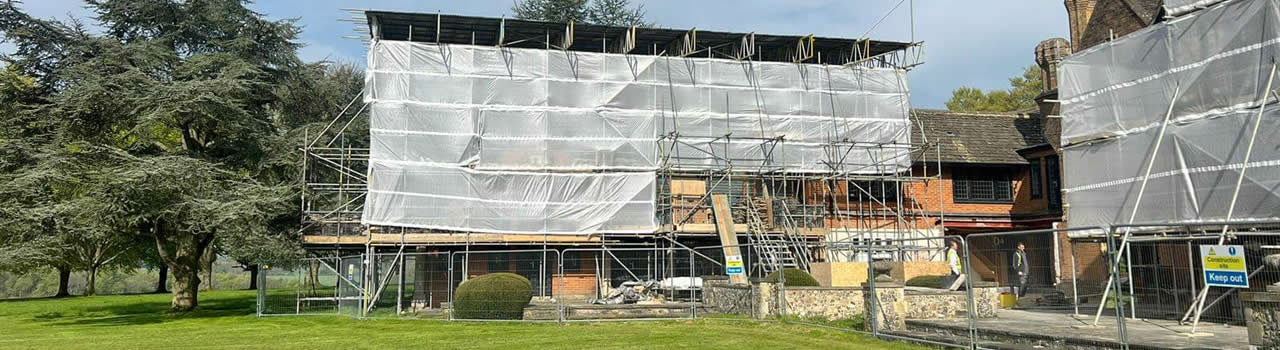
Scaffold Planning for Newbury’s Town, Village and Rural Properties
Newbury scaffolding often covers a broad spread of settings. Some projects sit on compact town-centre frontages with pavements, shop entrances and passing foot traffic nearby. Others are on larger homes, rural properties, schools, farm buildings or detached houses where access routes, soft ground and outbuildings need careful thought.
A scaffold that works well in one setting may be unsuitable in another. Town-centre work may need pedestrian control and clear boundaries. Rural or larger residential sites may need careful planning around uneven ground, long access routes, garden areas, gravel drives, trees or limited delivery space.
Important planning factors include:
- Ground conditions — Soft ground, gravel, slopes, paving and landscaped areas can affect load spreading and scaffold base positions.
- Public-facing elevations — Shops, offices and buildings close to footpaths may need clear separation, signage and protection below the work area.
- Access for residents or staff — Occupied homes, schools and commercial sites may need doorways, paths, parking and service routes kept usable.
- Rural-site logistics — Longer driveways, restricted turning areas and limited delivery space can affect material handling and installation planning.
- Building character — Older properties, delicate finishes, boundary walls and non-standard roof shapes may require a more tailored scaffold approach.
Where outdoor working areas need safer movement across uneven or restricted spaces, pedestrian gantries and protected walkways for safer access routes can help manage movement around more complicated sites.
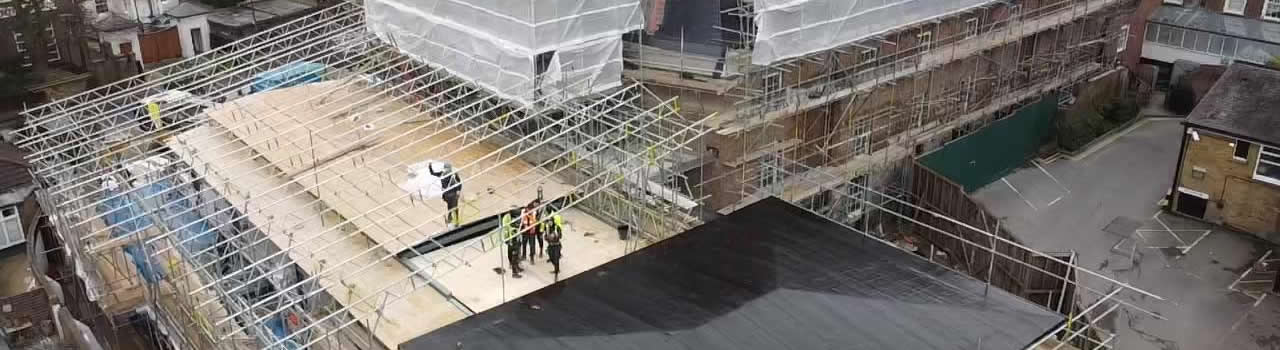
Scaffold Structures for Different Newbury Projects
Every Newbury project needs the scaffold structure to match the work being carried out. A small gutter repair, a barn roof, a townhouse repaint, a school repair programme and a commercial refurbishment all place different demands on access, load, protection and platform layout.
The right scaffold should help trades work at the correct height, move safely and handle materials without making the site harder to manage. Where work is phased, the scaffold may also need to be adapted as different contractors arrive.
Scaffold options may include:
- Independent scaffolding — Suitable for many roofline, painting, rendering, repointing, façade and window projects.
- Mobile scaffold towers — Useful for smaller inspection, installation or maintenance tasks where the ground conditions are suitable.
- Birdcage scaffolding — Helpful for internal ceiling work, halls, atriums, large rooms and open working areas.
- Cantilever scaffolding — Used where ground support is restricted by obstacles, lower roofs, access routes or fragile surfaces.
- Temporary roof systems — Useful when a property needs weather protection during roof repairs, structural work or exposed refurbishment.
- Traditional tube and fitting — For irregular elevations and older buildings, traditional tube fitting scaffold for adaptable access can help create a structure around non-standard shapes.
A scaffold should be built around the site conditions, not forced onto them. That is especially important on properties with older rooflines, rural access constraints or several trades working at once.
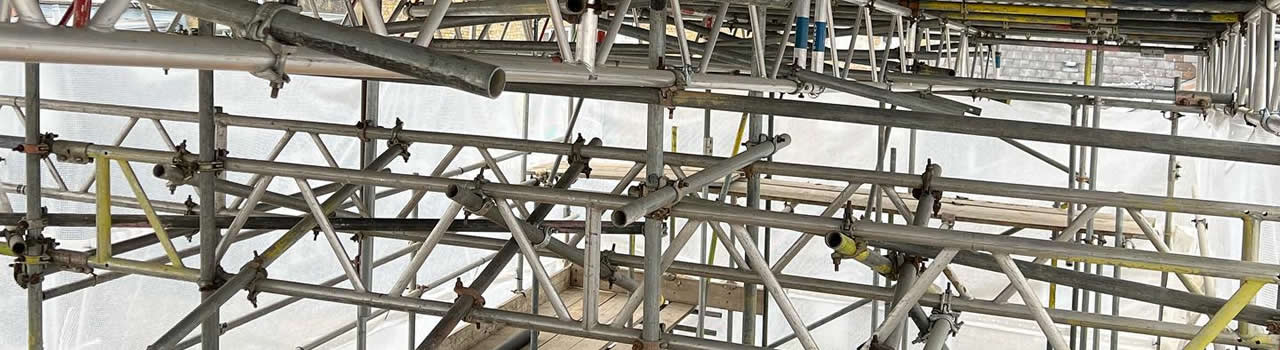
Residential Scaffolding for Newbury Homes
Homeowners in Newbury often need scaffolding for repairs and improvements that cannot be carried out safely from ladders. Roof work, chimney repairs, exterior painting, gutter replacement, rendering, window installation and loft conversions all benefit from proper working platforms.
Residential scaffold planning should consider the people living in the property as well as the trades using the structure. Entrances, driveways, side gates, gardens, pets, children, neighbours and delivery access may all need to be considered before installation.
Common domestic scaffold uses include:
- Chimney repairs — Safe access for repointing, flashing work, pot replacement, flaunching and stack surveys.
- Roof maintenance — Platforms for tile repairs, slate work, valleys, ridges, guttering, fascias, soffits and roof inspections.
- Exterior decoration — Stable lifts for painting, timber treatment, render repairs and upper-level façade maintenance.
- Loft conversions — Access for dormers, roof alterations, external finishes, window installation and roofline detailing.
- Home extensions — Scaffold support for builders working on new walls, roofs, openings and finishing details.
- Chimney and upper roofline projects — Where safe access to stacks is needed, chimney stack scaffolding for safer roof-level repairs can help trades work properly around the highest parts of the property.
A well-planned residential scaffold helps protect the home while giving trades the access needed to finish the job safely and neatly.
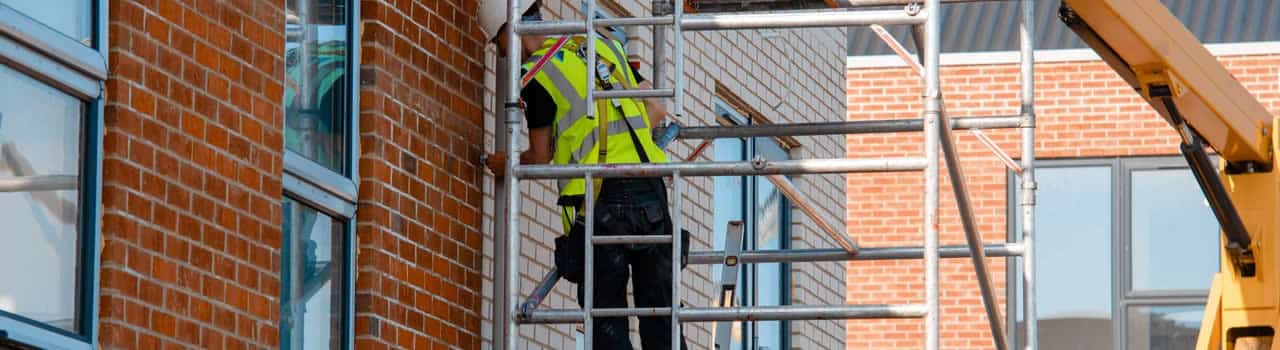
Scaffolding for Shops, Schools, Farms and Contractor Sites
Commercial and contractor-led scaffolding in Newbury can involve a wide mix of settings. Shops, offices, schools, hospitality premises, rural buildings, storage units, farms and managed sites may all need scaffold access that protects people nearby while allowing trades to work efficiently.
Some jobs need public-facing control, especially where scaffolding sits close to entrances or pavements. Others need careful planning around yards, outbuildings, plant, service routes or delivery areas. A contractor-led development may need a scaffold that supports several trades over a longer programme.
Scaffolding can support:
- Shop and town-centre works — Access for signage, windows, roofline repairs, gutters, fascias, cleaning, decoration and façade repairs.
- School and public building maintenance — Scaffold for roofing, windows, external repairs and planned maintenance during controlled working periods.
- Rural and agricultural buildings — Access for barns, storage buildings, outbuildings, roof repairs and external fabric maintenance.
- Managed property repairs — Scaffold for blocks, estates, communal buildings and property portfolios needing inspection or remedial work.
- Contractor-led construction — Access for brickwork, roofing, openings, upper levels, cladding, external finishes and snagging.
- Structural alteration support — Where temporary restraint or access is required, façade retention scaffolding for structural alteration projects can support more complex building work.
Commercial scaffold planning should bring together safe access, clear routes, protection below and the practical needs of the site programme.
How Scaffolding Is Installed Safely
Safe scaffold installation starts with a proper assessment of the building, the ground and the work being carried out. The scaffold team needs to understand working heights, platform positions, access routes, lower structures, surface conditions, public interfaces, expected loads and whether the building will remain occupied during the project.
Once the requirements are clear, the scaffold can be planned around lifts, ties, bracing, guardrails, toe boards, boards, ladder access and any protective features needed for the site. On rural or older properties, this may also mean planning around uneven ground, sensitive materials, boundary walls or long material routes.
During erection, trained scaffolders assemble the structure in a safe sequence using suitable components. The scaffold should be stable, properly braced, correctly boarded and fitted with the required safety measures before it is handed over for use.
If the work changes, the scaffold should be professionally adapted. Site workers should not remove ties, boards, rails or braces themselves, because unauthorised alterations can affect the stability and safety of the whole structure.
Scaffolding Safety Inspections and Regulations
Scaffolding must be inspected and maintained throughout the hire period. Weather, site use, material loading, ground movement, accidental impact and unauthorised changes can all affect the scaffold after installation.
Inspections should be completed before first use, at regular intervals while the scaffold remains in place, after bad weather, after any alteration and after anything that could affect safe use. This applies to small domestic scaffolds as well as larger commercial and contractor-led structures.
A proper inspection checks platforms, boards, access points, guardrails, toe boards, ties, bracing, base support, loading and the overall condition of the structure. It also helps ensure that materials are not being stored unsafely or blocking movement around the scaffold.
Regular scaffold inspection gives homeowners, contractors and site managers greater confidence that work at height remains properly controlled.
How Scaffolding Is Installed Safely
Choosing a scaffolding company in Newbury should involve more than checking availability. The scaffold affects safety, access, property protection, trade productivity and how smoothly the whole job runs. A dependable contractor should understand the site before recommending a structure.
A good scaffolding company will ask about the type of work, the property layout, the trades involved, how long the scaffold is needed, whether the site is occupied and whether there are public areas, soft ground, older building features or sensitive surfaces nearby.
When arranging scaffold hire, consider:
- Site understanding — The contractor should consider the building, ground, access, loading and surrounding risks before installation.
- Experience with varied property types — Newbury projects may involve town buildings, period homes, rural properties, schools and commercial premises.
- Clear communication — Installation, inspection, adaptations and removal should be explained so the project can be planned properly.
- Property protection — Gardens, paving, lower roofs, walls, windows, outbuildings and neighbouring areas should be considered early.
- Safe platform design — Lifts, boards, access ladders, guardrails and toe boards should suit the actual work being carried out.
- Adaptation support — If trades need different access as the job develops, scaffold changes should be made by competent scaffolders.
Benefits of Hiring Professional Scaffolders in Newbury
Professional scaffolders help make repair, maintenance and construction work safer and easier to manage. A properly installed scaffold gives trades stable platforms, clearer movement routes and safer positions for handling tools, materials and equipment at height.
Good scaffold planning can also protect the wider site. On Newbury homes, commercial buildings and rural properties, there may be gardens, driveways, outbuildings, public routes, school entrances, shopfronts or neighbouring boundaries close to the work area. These details should be considered before scaffold installation begins.
Key benefits include:
- Safer working conditions — Trades can complete roof, chimney, façade and window work from secure platforms.
- Better quality work — Stable access helps workers complete detailed repairs, finishes and inspections more accurately.
- Reduced property risk — Sensitive surfaces, lower roofs, walls, gardens and access routes can be considered before the scaffold is built.
- Improved site organisation — Materials, platforms and worker movement can be arranged around the job programme.
- Support for complex access — Older buildings, rural sites and mixed-use premises often need more considered scaffold planning.
- Less reliance on unsafe shortcuts — Trades are less likely to use ladders or improvised access when proper platforms are available.
Frequently Asked Questions About Scaffolding Newbury
Can scaffolding be installed on uneven or soft ground?
Scaffolding can often be installed where ground conditions are less straightforward, but the site needs to be assessed first. Soft ground, gravel, slopes and landscaped areas may require careful load spreading, suitable base arrangements and a scaffold design that reflects the surface below.
Is scaffolding suitable for older or period properties in Newbury?
Yes. Older and period properties often need carefully planned scaffolding for roof repairs, chimney work, repointing, exterior decoration and restoration. Extra care may be needed around delicate surfaces, unusual rooflines, boundary walls and areas where fixing options are limited.
Can scaffolding be arranged for commercial premises in Newbury town centre?
Yes. Town-centre scaffold projects can be planned around shopfronts, pedestrian routes, staff access, deliveries and public-facing areas. The exact arrangement depends on the building, the work, the pavement position and any additional protection needed below the work area.
Get a Free Quote for Scaffolding in Newbury
If you need scaffolding in Newbury for roofing, chimney repairs, home improvements, rural property work, shopfront maintenance, school buildings, commercial repairs or contractor-led projects, Stellar Scaffolding can help plan safe access around your site.
A properly designed scaffold gives trades secure platforms, helps protect the property and keeps the work easier to manage from installation through to dismantling.
Contact Stellar Scaffolding to arrange a site survey and request a clear quote for scaffolding in Newbury.
What Areas Do We Cover in and Around Newbury?
While we provide scaffolding in Newbury, we also cover nearby towns and villages across West Berkshire and the surrounding area, including:
Thatcham
Hungerford
Theale
Pangbourne
Hermitage
Kingsclere
Lambourn
Beenham
Highclere
We’re responsive, practical and ready to support homeowners, rural properties, contractors, shops, schools, managed buildings and commercial sites across the local area.