As a contractor, ensuring the safety of your workers is paramount. One crucial aspect of maintaining a safe construction site is regular inspections of scaffolding. Scaffolding is a temporary structure that supports workers and materials during construction, maintenance, or repair projects. Regular inspections help identify potential hazards and prevent accidents.
The frequency at which scaffolding should be inspected depends on various factors, such as the type of scaffold, its location, and the conditions it is exposed to. Generally, scaffolding should be checked before use, after any modifications or repairs, after adverse weather conditions such as strong winds or heavy rain, and at least every seven days while in use. Thorough inspections are essential to identify any defects or damage that could compromise the safety of workers.
Contractors should also make sure that competent individuals adhere to industry standards and regulations when designing and erecting scaffolding structures. Proper training for workers using the scaffold is also crucial to preventing accidents. By implementing these measures, contractors can create a safer work environment and reduce the risk of injuries on construction sites.
Who is allowed to carry out a scaffold inspection?
In accordance with OSHA regulations, scaffold inspections must be carried out by a competent person designated by the employer. A competent person possesses the knowledge, training, and experience necessary to identify hazards in scaffolding and take corrective action. This individual should be familiar with the specific type of scaffold being used, as well as any relevant regulations and standards.
The competent person must also have the authority to take immediate corrective action if any hazards are identified during the inspection. This may include halting work on the scaffold until the issues are resolved or making necessary repairs to ensure worker safety.
It is crucial for employers to designate a competent person to conduct scaffold inspections, as these individuals play a critical role in maintaining a safe work environment. By ensuring that someone with the proper training and experience inspects scaffolds regularly, employers can prevent accidents and injuries resulting from faulty equipment or improper installation.
The use of scafftags
Scafftags are a straightforward yet effective way to convey essential information about scaffold inspections. Typically, these tags are attached to the scaffold structure and serve as a visual indicator that the scaffold has been inspected before use. By using colour-coded tags containing specific details such as inspection dates, inspector signatures, and any outstanding issues, workers can quickly assess the safety status of the scaffold at a glance. This simplifies inspection and helps prevent accidents from overlooked or improperly inspected scaffolds.
Scafftags also serve as an additional record-keeping tool. Although detailed inspection reports should always be maintained for regulatory purposes, having readily available information on a scafftag can offer immediate verification that the scaffold has been inspected. This can be particularly beneficial in high-risk environments requiring regular inspections or in situations where multiple workers may need to verify the safety status of the scaffold before use.
How high should the guardrails on a scaffold be?
The Occupational Safety and Health Administration (OSHA) has specific requirements regarding the height of guardrails on scaffolds. According to OSHA standards, the top edge height of guardrails must be 950mm above the platform surface. This ensures that the guardrails are tall enough to prevent workers from accidentally falling off the scaffold while allowing easy access to work tasks.
Other factors must be considered when determining the height of guardrails on scaffolds. For example, if objects risk falling from higher levels onto workers below, taller guardrails may be necessary to provide additional protection. It is always better to err on the side of caution regarding scaffold safety.
The use of advanced guardrails when putting up a scaffold
Advanced guardrails offer several key benefits that traditional guardrails cannot provide. One of the main advantages of advanced guardrails is their ability to adapt to different scaffolding configurations. Traditional guardrails may not be suitable for all scaffold types, leaving workers vulnerable to falls and other accidents. On the other hand, advanced guardrails can be easily adjusted and customised to fit any scaffold setup, ensuring maximum safety for those working at heights.
Another vital reason advanced guardrails are essential when building a scaffold is compliance with industry regulations and standards. When working at heights, many governing bodies require specific safety equipment, including advanced guardrails. Failing to comply with these regulations can result in costly fines and penalties for employers and employees.
Using advanced guardrails can also help improve productivity on the job site. Workers who feel safe and secure while working at heights tend to focus on their tasks without distractions or worries about potential accidents. This increased confidence can lead to higher efficiency and better overall performance from your team. By investing in advanced guardrails for your scaffold setup, you are not only prioritising safety but also promoting a positive work environment that values the well-being of your employees.
How can I prevent falls while putting up scaffolding?
When putting up scaffolding, it’s crucial to ensure that the scaffold is set up correctly. This involves ensuring that the base plates are secure and level, the guardrails are correctly installed, and all scaffold components are in good working condition. It’s also essential to follow the manufacturer’s instructions for assembly and use the scaffold.
Another important tip for preventing falls while working on scaffolding is to always wear the proper personal protective equipment (PPE), including a hard hat, safety harness, and non-slip footwear. The safety harness should securely attach to an anchor point on the scaffold structure while working at heights.
It’s essential to maintain good housekeeping practices on the scaffold. This means keeping the work area clear of debris, tools, and materials that could cause a tripping hazard. It’s also important to be mindful of potential risks, such as wet or slippery surfaces, loose fittings, or unstable ground conditions.
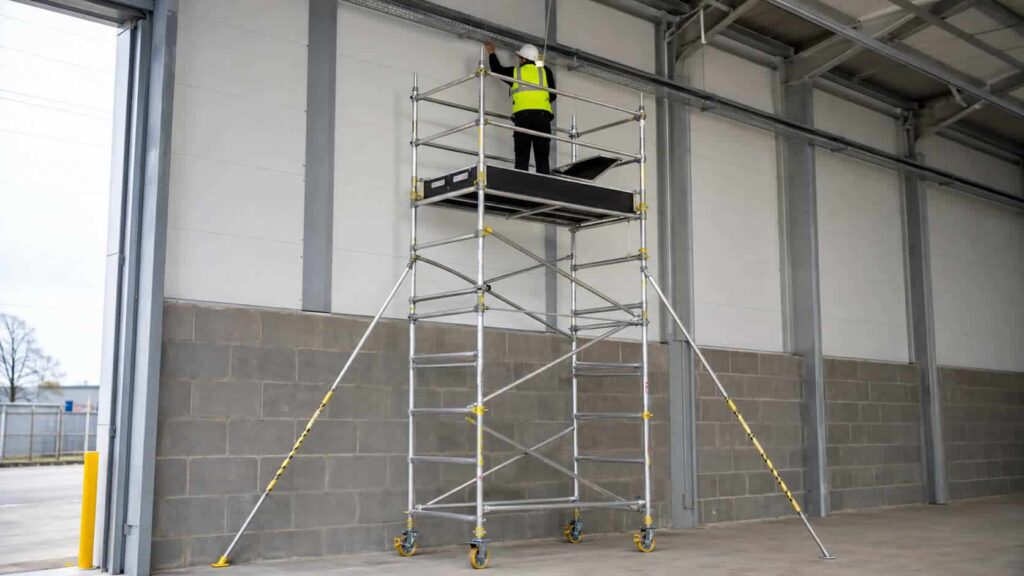
What training is required to put up a tower scaffold?
Workers must undergo training on safely assembling and disassembling a tower scaffold. This includes learning the correct sequence of steps for assembly and disassembly and understanding the scaffold’s weight capacity and load-bearing capabilities. They should also be trained on how to secure each section of the scaffold properly and ensure that all connections are secure before use. Additionally, they need to know how to safely lower components without causing damage or injury.
Another critical aspect of training for erecting a tower scaffold is understanding fall protection measures. Workers must be taught how to properly install guardrails, toe boards, and other safety features to prevent falls from heights. They should also understand how to correctly use personal protective equipment, such as harnesses and lanyards when working on a tower scaffold. Training on fall protection measures is crucial for preventing accidents and ensuring the safety of workers at all times.
Taking the necessary precautions is essential when erecting a tower scaffold. Anyone undertaking this task must be competent and have received training from a reputable source. This training should come from an industry-recognised training scheme, which will provide the necessary knowledge and guidance to complete the job safely and correctly. Proper training is crucial to avoid injuries, accidents, and property damage. By receiving quality training, individuals can ensure that their work is done with precision and care while keeping themselves and those around them safe.
If you are searching for Scaffolders in Guildford and surrounding areas, contact Stellar Scaffolding for more information.