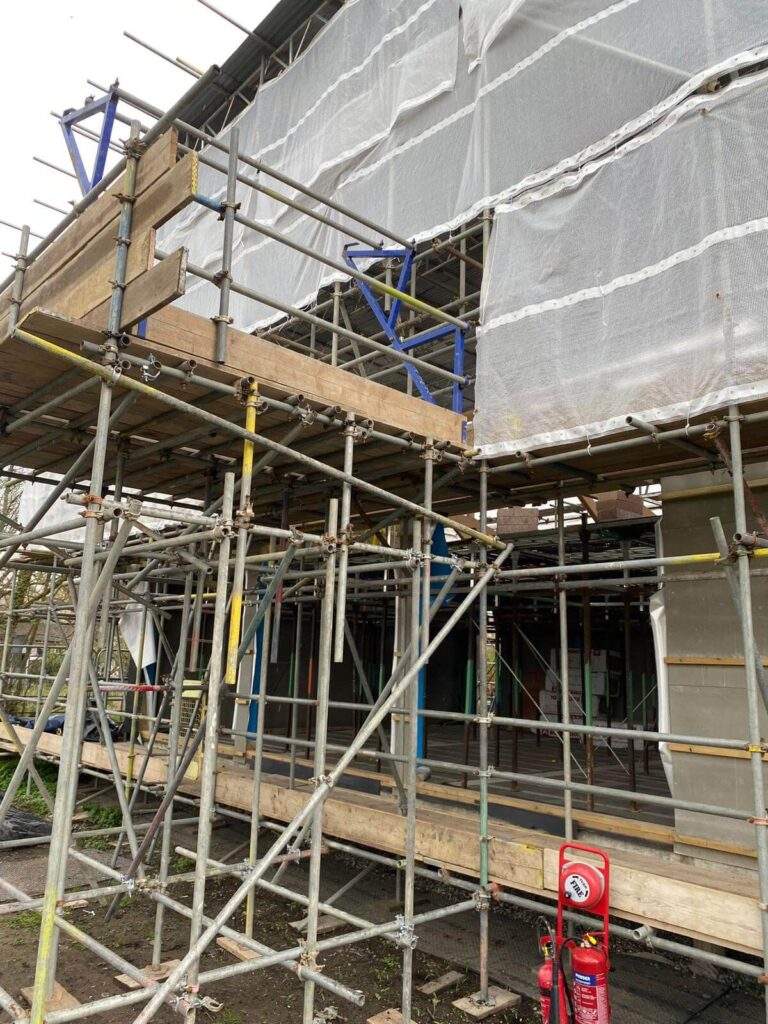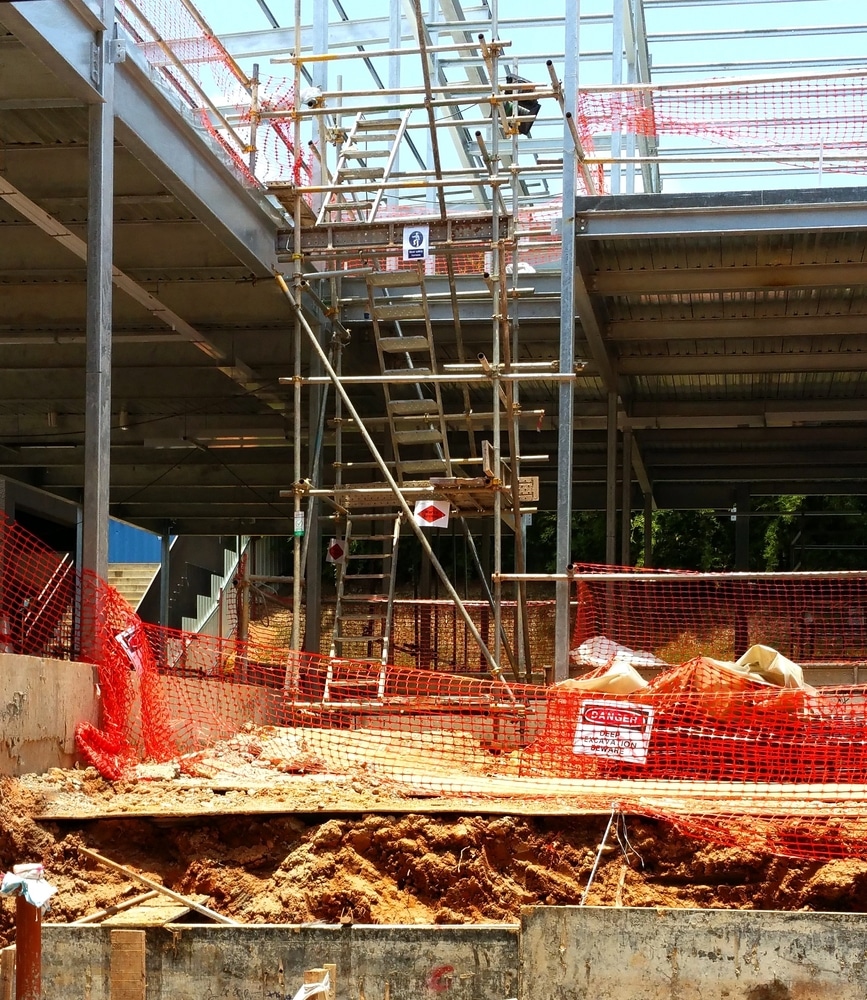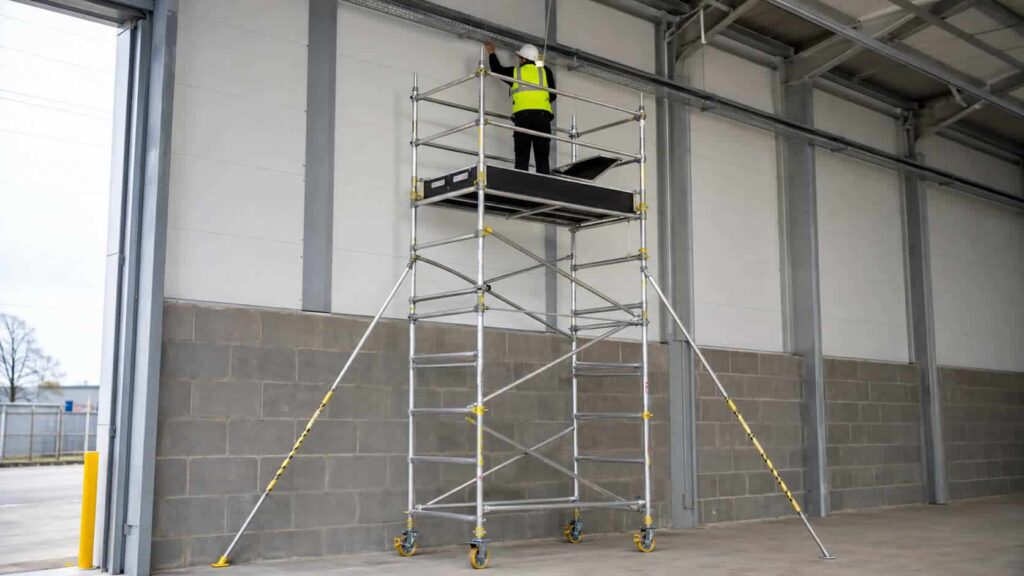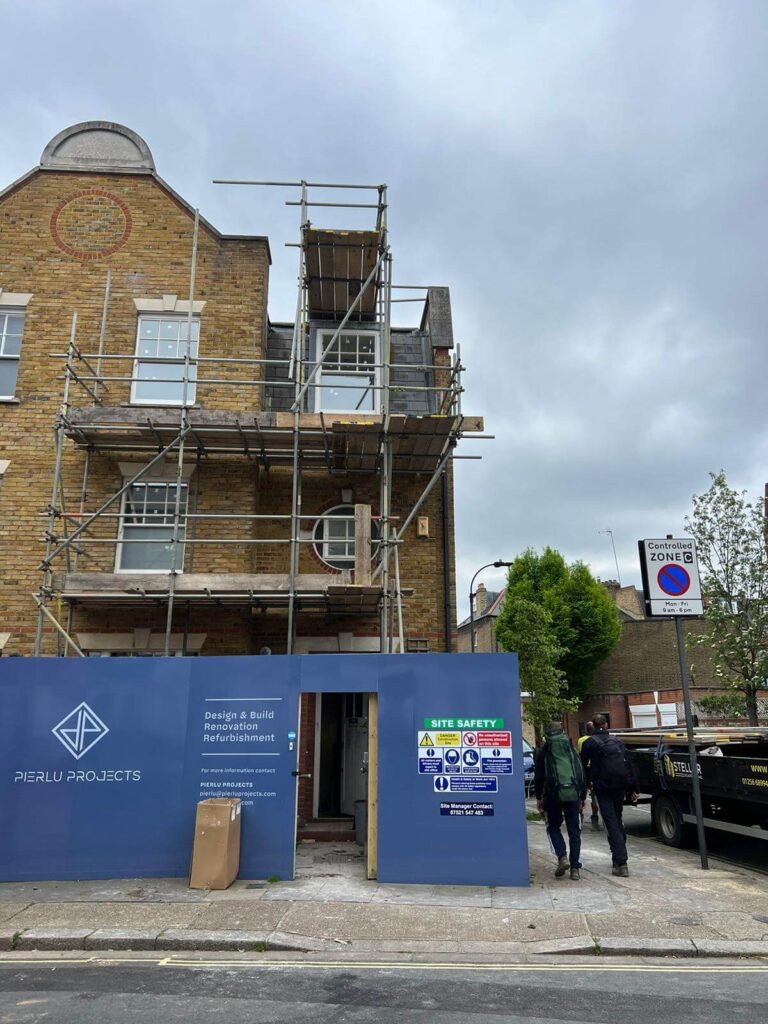
Seeing scaffolding suddenly appear outside your rented home can be unsettling, particularly if you were not expecting building work to take place. It can affect daylight, privacy, access, parking and security, while contractors may need to enter gardens, balconies or other parts of the property.
So how much warning should a landlord actually give before scaffolding goes up?
The answer depends on what the scaffolding is for and whether anyone needs access to your home. There is no single rule in England requiring a landlord to give a specific number of days’ notice simply because scaffolding is being erected externally. However, landlords do have clear responsibilities when they or their contractors need to enter a rented property.
Does a Landlord Have to Give 24 Hours’ Notice?
If a landlord or their contractor needs to enter your rented home to inspect its condition or carry out repairs, landlords should normally provide at least 24 hours’ notice and arrange access at a reasonable time of day.
Government guidance states that landlords have a legal right to enter a rented property for inspection or repairs, but tenants must normally receive at least 24 hours’ notice. Immediate access can be possible where there is a genuine emergency.
This requirement is particularly relevant where scaffolding work involves access through your home, garden, yard, balcony or another part of the property included within your tenancy.
For example, scaffolders may need to:
- Carry equipment through a rear garden
- Access a roof from inside the property
- Enter a courtyard or enclosed area
- Reach windows or other parts of the building
- Allow another contractor to undertake repairs from the scaffold
Where entry into the rented home is required for repairs covered by the landlord’s repairing obligations, the statutory right of access under section 11 of the Landlord and Tenant Act 1985 is associated with 24 hours’ written notice at a reasonable time of day.
Does the 24-Hour Rule Apply Just Because Scaffolding Is Outside?
Not necessarily.
There is an important difference between giving notice that scaffolding will be erected and giving formal notice that somebody needs to enter the tenant’s home.
If scaffolding can be erected entirely from a communal area, pavement, neighbouring land or another area outside the tenant’s rented accommodation, the standard 24-hour access rule does not automatically mean that the landlord only has to tell the tenant 24 hours beforehand.
Equally, it does not create a blanket legal requirement that every external scaffold installation must be notified exactly 24 hours in advance.
In practice, landlords and managing agents should provide reasonable advance warning whenever planned building works are likely to affect people living in the property.
Good communication becomes especially important where the scaffold could affect:
- Windows
- Natural light
- Privacy
- Gardens
- Balconies
- Parking spaces
- Entrances
- Deliveries
- Bin access
- Security
- Noise levels
- Normal use of the property
Giving tenants proper warning gives them an opportunity to prepare for the disruption and raise any legitimate access or safety concerns before work begins.
How Much Notice Is Reasonable for Planned Scaffolding?
For non-emergency work, there is rarely a good reason to tell tenants only moments before a scaffolding team arrives if the landlord has known about the project for days or weeks.
Where possible, tenants should be told as early as reasonably practical.
A landlord arranging planned roof repairs, external painting, repointing or window work may already know the intended start date well in advance. Passing that information to tenants allows them to prepare for contractors working immediately outside their home.
Shelter advises that tenants should normally receive at least 24 hours’ written notice for inspections and reasonable notice when somebody needs access to carry out repairs, with reasonable notice usually being at least 24 hours.
A tenancy agreement may also contain its own provisions regarding access and notice. Landlords and tenants should therefore check the agreement rather than assuming that 24 hours is the only consideration.
What Should the Landlord Tell the Tenant?
Good notice should contain more than a vague statement that “building work” is taking place.
Where information is available, tenants should ideally be told:
- What work is being carried out
- Why scaffolding is required
- The expected erection date
- Approximately how long the scaffold will remain
- Whether scaffolders need access through the property
- Whether gardens, balconies or parking areas will be affected
- The expected working hours
- Whether windows will temporarily be obstructed
- Whether other contractors will be working from the scaffold
- Who to contact if there is an access or security problem
Exact completion dates are not always possible because building programmes can change due to weather, materials or the condition discovered once work begins.
However, an approximate programme is considerably more helpful than giving the occupants no information at all.
What About Emergency Scaffolding?
Emergencies are different.
A building may suddenly require scaffolding because of storm damage, falling masonry, an unsafe chimney, roof damage or another immediate danger.
In situations where urgent action is needed to make a property safe, it may not be practical to provide the same notice that would be expected for planned work.
Government guidance recognises that immediate access may be necessary in an emergency, while Shelter also acknowledges that repair access can sometimes take place at very short notice.
Even then, the landlord or managing agent should communicate with residents as quickly as circumstances allow.
An emergency may justify short notice. It should not become an excuse for poor communication once the immediate danger has been dealt with.
Can a Tenant Refuse Access for Scaffolding Work?
Tenants generally need to provide reasonable access where the landlord needs to inspect the property or carry out repairs for which the landlord is responsible.
At the same time, landlords should not simply enter whenever they choose.
Tenants have a right to live in their rented property without unnecessary interference, and government guidance identifies the right to live in the property undisturbed as one of a private tenant’s basic rights.
If the suggested appointment is genuinely inconvenient, it may be possible to agree an alternative time.
Shelter recommends that tenants who cannot accommodate a proposed visit suggest another suitable appointment rather than simply refusing all access.
A landlord should seek legal advice rather than attempting to force routine access where a dispute develops.
Scaffolding and the Right to Quiet Enjoyment
The phrase “quiet enjoyment” does not mean that a landlord can never arrange noisy building work.
Properties need maintenance, and some repairs inevitably create disruption.
However, tenants should be able to occupy their homes without unreasonable interference from the landlord. Government and Shelter guidance both recognise this principle when discussing landlord access and repairs.
Problems may arise where, for example:
- Contractors repeatedly arrive without notice
- Access is demanded at unreasonable times
- Scaffolding unnecessarily blocks essential access
- Contractors enter private areas without agreement
- Works continue considerably longer than tenants were told without explanation
- Security concerns are ignored
- The landlord fails to communicate significant changes to the programme
The existence of necessary repairs does not remove the need for reasonable management of the work.
Security Should Be Considered Before Scaffolding Goes Up
Scaffolding can create routes to upper-floor windows and other parts of a building that would normally be difficult to reach.
That does not mean scaffolding automatically makes a building unsafe, but security should form part of the planning process.
Tenants may reasonably want to know whether they should keep certain windows locked or whether contractors will be working immediately outside bedrooms or other private rooms.
For larger residential blocks, landlords and managing agents should also consider how access to the scaffold itself will be controlled.
Communication before erection can prevent understandable concern when residents suddenly see platforms appearing directly outside their windows.
What If the Scaffold Is for Work to a Block of Flats?
Scaffolding around a block of flats may be required for roof repairs, rendering, masonry work, window replacement, cladding work or general external maintenance.
The landlord or freeholder may be able to arrange this work without entering every individual flat.
That means the standard 24-hour rule relating to entry into an individual home may not necessarily apply to every stage of the scaffold installation.
Residents should nevertheless be kept informed about significant work affecting their building.
For leaseholders, there can also be an entirely separate consultation issue where the cost of major works is being recovered through the service charge.
Leaseholders and Section 20 Major Works
Leaseholders should not confuse ordinary notification about scaffolding with the formal consultation requirements that can apply to major works.
Under the Section 20 consultation process, a landlord or freeholder generally has to consult leaseholders about qualifying major works where any individual leaseholder would be required to contribute more than £250, including VAT, through the service charge.
Roof replacement, major external repairs and other substantial works may require scaffolding and can potentially fall within this process.
The Leasehold Advisory Service explains that Section 20 consultation is intended to inform leaseholders about proposed work, its reasons and costs while giving them an opportunity to make observations.
The first stage commonly involves a notice of intention explaining the proposed works and why they are required. Leaseholders are normally given 30 days to make observations at that stage.
This is very different from the ordinary 24-hour notice associated with a contractor needing to enter a rented home.
What If Scaffolding Appears Without Any Warning?
The first step is usually to contact the landlord, letting agent or managing agent and ask what work is taking place.
Useful questions include:
- Why has the scaffold been erected?
- How long is it expected to remain?
- Will contractors require access to the property?
- Which areas of the building are being worked on?
- Will windows or entrances be affected?
- Who should be contacted if there is a problem?
If contractors are requesting entry to your home without notice, you can ask the landlord or agent to arrange access properly unless there is a genuine emergency.
Where the issue involves persistent unwanted access, serious disruption, harassment or unresolved repair problems, tenants may need specialist housing advice.
How Landlords Can Make Scaffold Projects Easier for Tenants
For landlords, developers and managing agents, good communication can make a significant difference to how scaffold works are received.
Residents are far more likely to understand temporary disruption when they know what is happening and why.
Before scaffold erection, it is sensible to establish:
- Where the scaffold will stand
- Whether private gardens or yards are involved
- Which access routes contractors will use
- Whether residents’ entrances remain clear
- How long the scaffold is likely to remain
- Whether parking needs to be temporarily changed
- Which windows or balconies will be affected
- Who is responsible for communicating changes
The scaffolding contractor can help identify many of these practical issues during the planning or survey stage.
Planning Scaffolding for Rented and Managed Properties
At Stellar Scaffolding, we work with landlords, property managers, developers, contractors and residential clients requiring professionally planned access for building works.
Residential scaffold projects often involve more than simply creating a working platform. The structure may need to fit around occupied properties, entrances, neighbouring buildings and areas that residents continue to use throughout the project.
Planning these requirements before erection helps reduce avoidable disruption and gives landlords clearer information to pass on to occupants.
If you are arranging scaffolding for repairs, maintenance, roofing or other work at a rented or managed property, contact Stellar Scaffolding to discuss the project and request a quotation.
This article provides general information for England and should not be treated as individual legal advice. Tenancy agreements, leases and individual circumstances can affect the position.