
Scaffolding Maidenhead
Scaffolding Maidenhead – Reliable Access for Homes, Businesses and Building Sites
Scaffolding in Maidenhead needs to be planned with the building, the surroundings and the pace of the work in mind. From riverside homes and residential streets to retail premises, offices, schools, managed blocks and construction sites, each project needs safe access that suits the property rather than a generic scaffold arrangement.
Stellar Scaffolding provides scaffold hire and installation for homeowners, landlords, contractors, property managers and commercial clients across Maidenhead. Whether the work involves roof repairs, chimney access, exterior decorating, window replacement, façade repairs, extensions or larger refurbishment, the scaffold should give trades a secure platform while helping protect the site below.
Maidenhead projects can involve different access challenges. Some properties have large driveways and gardens, while others sit close to pavements, car parks, neighbouring boundaries or commercial entrances. A scaffold for a detached house near the river will often need a different plan from a scaffold for a town centre shopfront, an apartment block or a contractor-led development.
A carefully designed scaffold can help with:
- Safe high-level working — Trades can stand, move and handle tools from stable platforms while completing roofline, façade, gutter, window or brickwork tasks.
- Better protection below — Boards, guardrails, barriers and toe protection help reduce risk around gardens, driveways, entrances and public-facing areas.
- Smoother project coordination — Scaffold access can be arranged around roofers, builders, decorators, surveyors, glazing teams and maintenance contractors.
- Reduced disruption to occupied buildings — Homes, offices and managed properties can remain easier to use when routes and access points are considered early.
- Practical support for heavier work — Where materials need to be lifted, stored or moved safely, the scaffold layout needs to account for loading and working space.
For projects that involve taller elevations, multiple trades or large external works, Stellar Scaffolding can provide scaffold support for larger multi-unit building sites, helping contractors maintain safer access across more demanding programmes.
Professional Scaffolding Services in Maidenhead
Our scaffolding services in Maidenhead are built around practical site access, safe working platforms and the type of work being carried out. A short maintenance job may only need a compact scaffold or tower, while a full roof replacement, façade refurbishment or development project may need multiple elevations, loading areas, protective measures and planned adaptations.
Before installation, the scaffold needs to be planned around the property layout, ground surface, working height, access routes, loading requirements and any areas that must remain open. This is especially important where scaffolding sits near a public footpath, driveway, shop entrance, school route, car park or shared residential access.
Scaffolding may be required for:
- Roofing and chimney works — Stable platforms for tile replacement, leadwork, ridges, valleys, chimneys, flaunching, gutters and fascia repairs.
- External property repairs — Access for painting, rendering, repointing, cladding, window replacement, cleaning and inspection.
- Residential extensions — Scaffold structures for side extensions, rear extensions, loft conversions and roof alterations.
- Commercial maintenance — Safe access around offices, retail units, hospitality premises, schools, care settings and managed buildings.
- Contractor-led construction — Scaffolding for brickwork, structural alterations, upper-floor access, external finishes and project sequencing.
- Site protection requirements — Where work creates a risk of falling materials, debris and protection fans for safer public-facing projects can help shield areas below the work zone.
The right scaffold should make the work safer and easier to organise while avoiding unnecessary obstruction around the property.
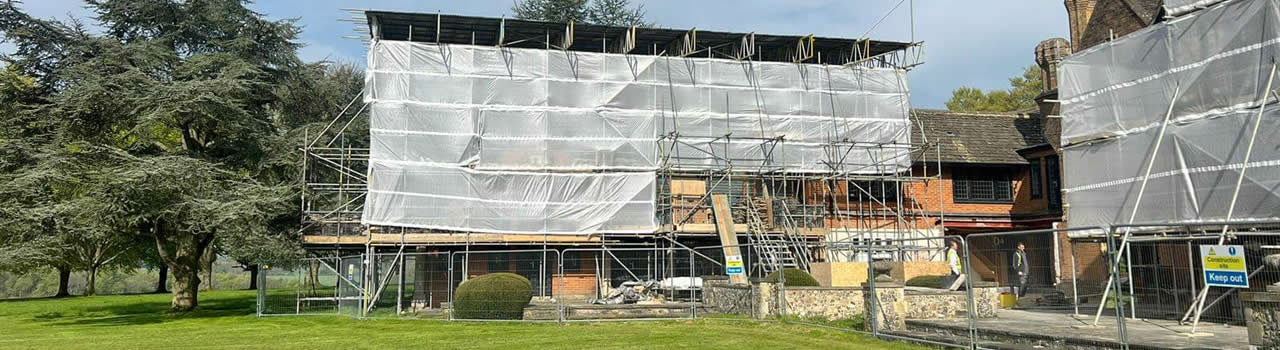
Scaffold Planning for Maidenhead Properties and Worksites
Maidenhead scaffolding can involve a broad range of site conditions. Some residential properties have generous access, while others have narrow side routes, lower roof sections, conservatories, garages, boundary walls or landscaped areas that need careful protection. Commercial properties may need scaffold installed around customers, staff, car parks or deliveries.
A scaffold plan should consider more than where the tubes and boards will sit. It should also consider how people will move around the site, how materials will be delivered, whether the building remains occupied, what surfaces need protection and how the scaffold may need to change as the work progresses.
Important planning factors include:
- Driveways and private access — Scaffolding may need to preserve vehicle movement, garage access, doorways or safe pedestrian routes where possible.
- Lower structures and fragile areas — Conservatories, porches, bay windows, flat roofs, canopies and garden buildings can affect scaffold positioning.
- Public or shared spaces — Pavements, car parks, residential entrances and commercial frontages need clear separation from active work areas.
- Working over roof details — Dormers, chimneys, parapets, valleys and gutter lines need platforms placed at useful working heights.
- Longer project programmes — Scaffold may need to stay suitable for several trades, not just the first contractor on site.
Where scaffold must bridge or work above lower structures, scaffolding over garages for safe upper-level access can help trades reach rooflines and elevations without placing unnecessary pressure on the structure below.
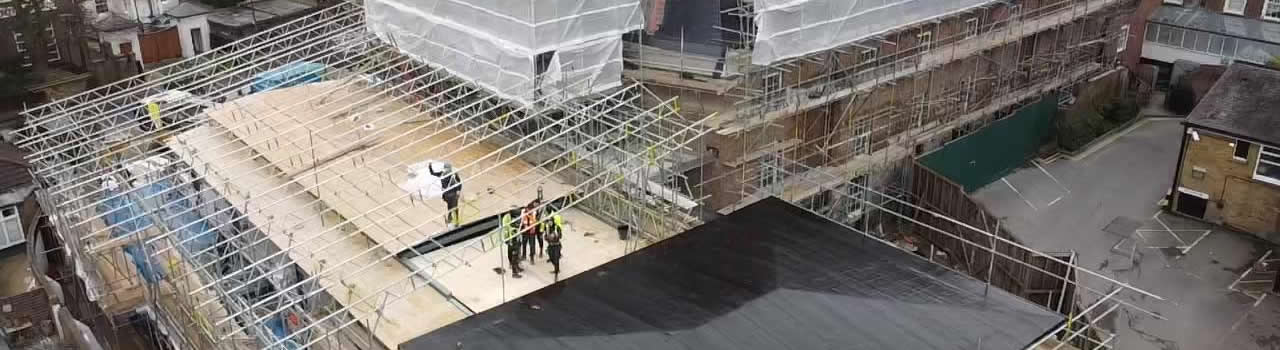
Scaffold Options for Different Maidenhead Projects
Different jobs call for different scaffold systems. A single elevation scaffold may be enough for basic exterior work, while a larger refurbishment, roof project, shopfront repair or construction site may need a more detailed setup with access points, loading zones and protective features included from the start.
The scaffold should be chosen to suit the type of work, the building shape, the expected load and the amount of time the structure will remain in place. Good planning reduces unnecessary changes and helps trades work more efficiently.
Scaffold setups may include:
- Independent scaffolding — Often used for roofline repairs, painting, rendering, repointing, window replacement and general exterior maintenance.
- Trestle scaffolding — Suitable for certain lower-level works where the task is limited and site conditions are appropriate.
- Mobile scaffold towers — Useful for smaller repairs, inspections, installations and short-duration access where a full scaffold is not needed.
- Birdcage scaffolding — Helpful for internal works requiring a broad platform, such as ceilings, halls, atriums or large voids.
- Cantilever scaffolding — Useful where ground-level support is restricted by obstacles, fragile surfaces, lower structures or access routes.
- Suspended access — For some tall or difficult elevations, suspended scaffolding for hard-to-reach façades may provide an alternative way to reach the working area.
A suitable scaffold arrangement should feel like part of the project plan, not a separate obstacle that trades have to work around.
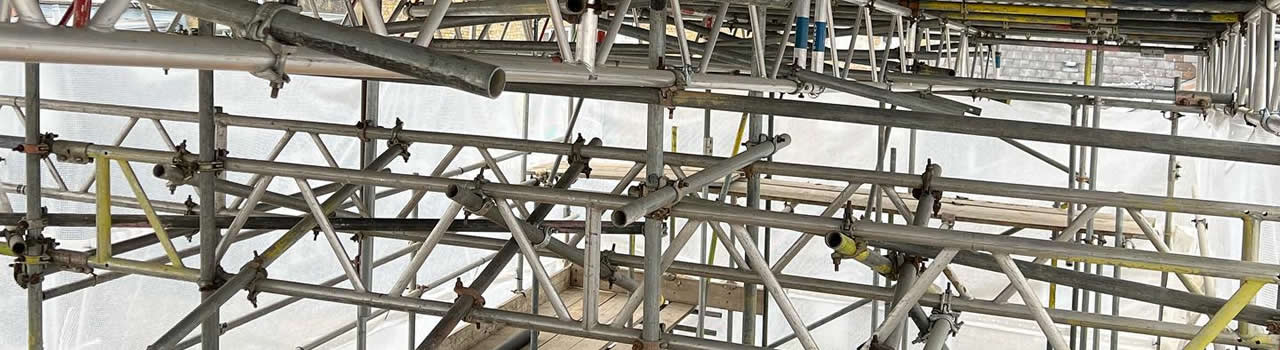
Residential Scaffolding for Maidenhead Homes
Homeowners in Maidenhead often need scaffolding for repairs and improvements that cannot be completed safely from ladders. Roof work, chimney repairs, gutter replacement, exterior painting, rendering, window installation and loft conversions all require stable access when the job involves height, materials or repeated movement along the elevation.
Residential scaffolding should be practical as well as safe. A family home may need access to remain open for daily use, while a rental property or managed home may need clear communication around installation, inspections and removal. Gardens, patios, conservatories, garages and neighbouring boundaries should all be considered before the scaffold is erected.
Common domestic uses include:
- Roof repairs and replacements — Stable scaffold platforms help roofers handle materials safely and work along ridges, valleys, gutters and edges.
- Chimney maintenance — Stacks, pots, lead flashings and brickwork need secure access at roof level.
- Loft conversions — Dormers, roof alterations and upper-level finishes often require scaffold that supports several stages of the build.
- Exterior decorating — Painting, timber repairs and render work are easier to complete neatly when trades have full platform access.
- Window and façade work — Upper-floor glazing, repairs and inspection tasks need a safe working position across the elevation.
- Solar panel installations — For renewable upgrades, scaffolding for solar panel installation gives installers safer roof access and room to handle panels properly.
A well-planned residential scaffold helps trades work efficiently while protecting the home and keeping disruption as controlled as possible.
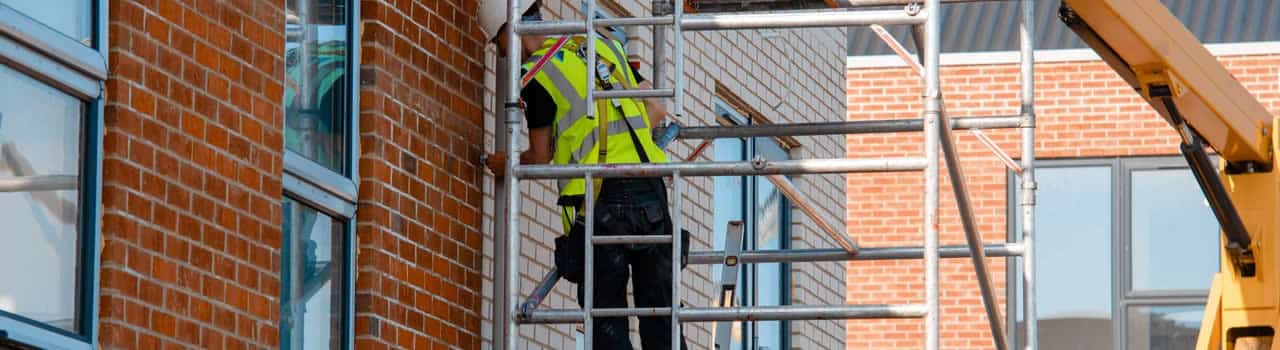
Scaffolding for Commercial Sites, Managed Buildings and Contractors
Commercial and contractor-led scaffolding in Maidenhead often needs a more detailed access plan. The scaffold may affect staff entrances, customer routes, deliveries, car parks, neighbouring businesses, residents or several subcontractors using the same site. Planning has to account for safety and productivity at the same time.
For managed buildings, the scaffold must be arranged with residents and visitors in mind. For contractors, it must support the programme, from early access and structural works through to finishing trades. For commercial premises, the scaffold may need to reduce disruption while still giving trades the space they need to work properly.
Scaffolding can support:
- Office and retail refurbishments — Access for roofline work, signage, window replacement, cladding, cleaning and external repairs.
- Managed residential blocks — Scaffold structures for façade maintenance, roof repairs, balcony work, window access and inspection.
- Builder-led projects — Safe access for brickwork, roof structures, openings, extensions, external finishes and snagging.
- Property developer sites — Multi-stage scaffold access for new builds, conversions, larger refurbishments and external envelope works.
- Industrial and warehouse maintenance — Access for high-level repairs, inspection, plant areas, guttering and external building fabric work.
- Structural support work — Where temporary stability is required, support scaffolding for structural and remedial works can help provide carefully planned temporary access and support.
Commercial scaffold planning should keep the building operational where possible while protecting workers, visitors and the public.
How Scaffolding Is Installed Safely
Safe scaffold installation starts with understanding the building and the work being carried out. The scaffold team needs to look at the working height, ground conditions, access routes, nearby hazards, loading needs, rooflines, entrances and any areas that need protection before materials arrive on site.
Once the site has been assessed, the scaffold layout can be planned around platform heights, ladder access, board positions, guardrails, toe boards, bracing, ties and any additional protection. On homes, this may mean keeping access practical for the occupants. On commercial or public-facing sites, it may mean creating clearer separation between the work area and people nearby.
During installation, trained scaffolders assemble the structure in a controlled sequence using the correct components for the job. Each section must be secure before the next part is built, and the completed scaffold should be checked before it is used by trades.
Scaffold alterations should only be made by competent scaffolders. If a trade needs a platform changed or access repositioned, it should be arranged properly rather than adjusted informally on site.
Scaffolding Safety Inspections and Regulations
Scaffolding must be inspected and maintained throughout the hire period. A structure can be affected by weather, site use, stored materials, accidental impact, unauthorised changes or changes to the work taking place around it.
Inspections should be completed before the scaffold is first used, at regular intervals while it remains in place, after bad weather, after alterations and after anything that could affect safe use. This is especially important on sites near public spaces, commercial entrances, schools, car parks or occupied buildings.
A proper inspection should check boards, ties, guardrails, toe boards, bracing, base plates, access points, loading and overall stability. It should also identify whether materials are being stored sensibly and whether the scaffold still suits the current stage of the project.
Reliable inspection routines help keep work moving while reducing the risk of unsafe access developing during the job.
How Scaffolding Is Installed Safely
Choosing a scaffolding company in Maidenhead should be based on safety, suitability and communication. A scaffold is not just a frame around a building; it affects how trades work, how people move around the site and how well the project stays organised.
A dependable scaffolding contractor should ask about the job, the building, the trades involved, the expected duration, access restrictions, public interfaces and anything that needs protection. These details help shape a scaffold that suits the project rather than creating avoidable access problems.
When arranging scaffold hire, consider:
- Site survey detail — The scaffold should be planned after checking access, height, loading, surfaces and nearby hazards.
- Relevant project experience — Residential repairs, managed blocks, commercial work and construction sites all require different planning.
- Clear communication — Installation, inspections, adaptations and removal should be explained so the wider project can be organised properly.
- Protection planning — Driveways, windows, entrances, landscaping, lower roofs and neighbouring properties should be considered before erection.
- Safe access design — Platforms, ladders, guardrails, toe boards and working lifts need to suit the trades using the scaffold.
- Flexibility for project changes — If the work develops, scaffold adaptations should be handled safely and professionally.
Benefits of Hiring Professional Scaffolders in Maidenhead
Professional scaffolders help make building work safer, cleaner and easier to manage. Instead of forcing trades to rely on ladders, temporary platforms or awkward access, a properly installed scaffold gives them the correct working height and a stable place to handle tools and materials.
Good scaffold planning can also reduce disruption. On homes, it can help keep access usable and protect vulnerable areas. On commercial and managed sites, it can help separate workers from residents, staff, visitors or the public. On contractor-led projects, it can support sequencing and reduce delays caused by poor access.
Key benefits include:
- Safer working conditions — Trades can work from secure platforms with guardrails, toe boards and suitable access points.
- Improved workmanship — Roof repairs, façade work, decorating and window installation can be completed more accurately from stable platforms.
- Better site organisation — Materials, access routes and trade movement can be planned more effectively.
- Reduced risk to the property — Sensitive surfaces and lower structures can be considered before scaffold installation begins.
- Support for different project sizes — The scaffold can be scaled from small residential jobs to larger commercial or development works.
- More confidence for clients and contractors — Everyone involved has a clearer understanding of how the work at height will be carried out safely.
Frequently Asked Questions About Scaffolding Maidenhead
Can scaffolding be arranged for a house on a narrow driveway?
Yes, but the scaffold needs to be planned around the available space. A site survey will show whether standards can be positioned safely, whether access can remain partly open and whether protection is needed for paving, garage doors, walls or neighbouring boundaries.
Do commercial premises need special scaffold planning?
Commercial premises often need more detailed planning because staff, visitors, customers, deliveries or neighbouring businesses may be affected. The scaffold may require clearer segregation, timed installation, protection measures and careful communication so the building can remain as safe and practical as possible.
Can scaffolding be adapted if the project changes?
Yes. If the work moves into a new phase or trades need different access, the scaffold can usually be adapted by competent scaffolders. Boards, guardrails, ties or access points should not be changed by site workers, because unauthorised alterations can affect safety.
Get a Free Quote for Scaffolding in Maidenhead
If you need scaffolding in Maidenhead for roofing, repairs, exterior maintenance, extensions, commercial refurbishment, managed buildings or contractor-led construction, Stellar Scaffolding can help plan safe access around your site.
A suitable scaffold gives trades proper working platforms, helps protect the property and supports a smoother project from installation to removal.
Contact Stellar Scaffolding to arrange a site survey and request a clear quote for scaffolding in Maidenhead.
What Areas Do We Cover in and Around Maidenhead?
While we provide scaffolding in Maidenhead, we also cover nearby towns and areas across Berkshire, Buckinghamshire and the surrounding region, including:
Windsor
Marlow
Cookham
Taplow
Burnham
Slough
Bray
Twyford
Henley-on-Thames
We’re responsive, practical and ready to support homeowners, contractors, commercial premises, managed buildings and development sites across the local area.