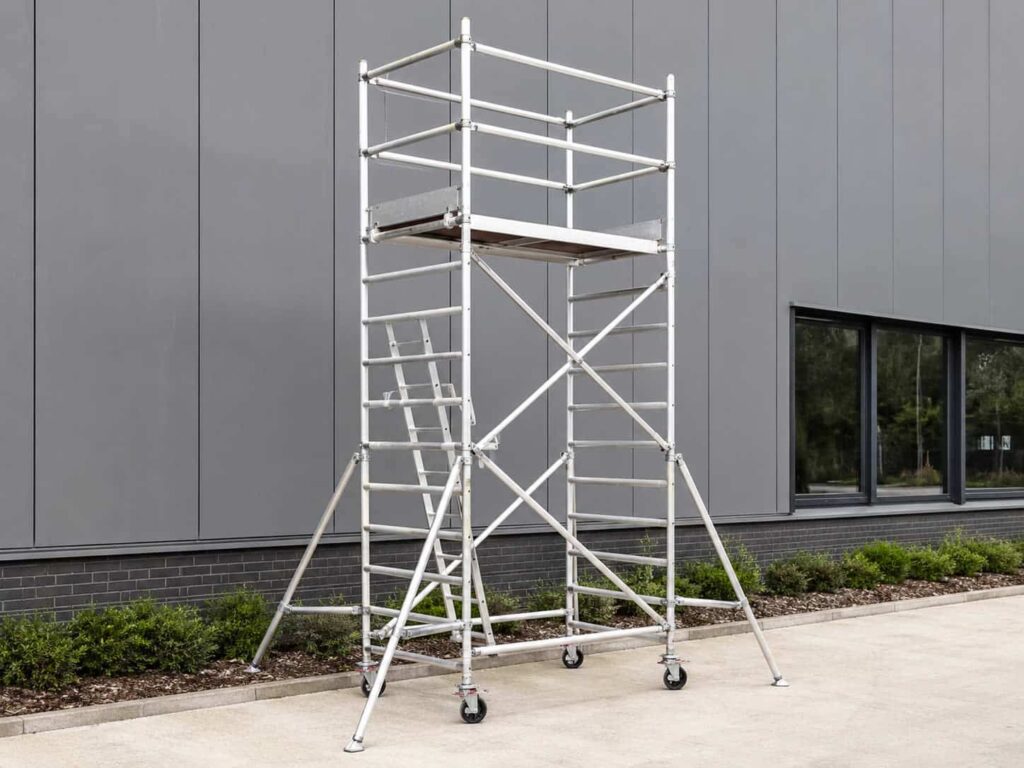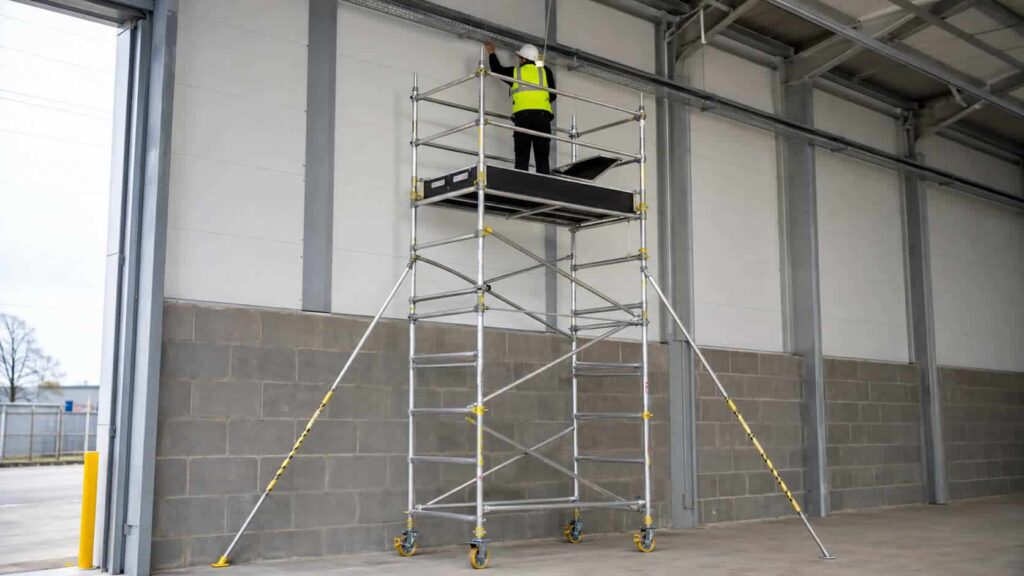
A 3T scaffold tower is a tower assembled using a method known as “Through The Trapdoor”. The idea is that the person building the tower installs guardrails from a protected position through the trapdoor platform, instead of standing on an unprotected platform edge while assembling the next level. In simple terms, it is a safer assembly method designed to reduce fall risk during erection and dismantling.
The name can confuse people because it sounds like a brand, a size or a load rating. It is not really any of those. 3T describes a specific method of putting up and taking down a scaffold tower. It is widely discussed in relation to safe tower assembly, especially where aluminium scaffold towers are used for maintenance, decorating, construction, electrical work, ceiling access and other short-duration tasks.
What 3T Means In Scaffold Tower Assembly
3T stands for Through The Trapdoor. The trapdoor is the opening in the tower platform that allows the user to climb up internally. During 3T assembly, the operative remains positioned through that opening while fitting the guardrails for the next platform level. This means the guardrails are installed before the operative stands fully on the platform above.
The important point is sequencing. The tower is not just built upward in any convenient order. The method is designed so the person assembling it does not expose themselves to an unguarded platform. The same principle applies during dismantling, where guardrails are removed from a protected position rather than from an exposed edge.
Why The Method Matters
Falls during tower assembly can happen before the tower is fully built, not just while it is being used. A platform might eventually have guardrails and toe boards, but the person erecting it could still be at risk if they stand on a level before edge protection is installed. The 3T method addresses that stage of the process.
This is why a tower can be unsafe even if it looks fine once completed. If it was assembled using poor technique, missing components or the wrong order, the erection process itself may have created risk. For contractors, facilities teams and property managers, the assembly method is part of safe access planning, not a minor technical detail.
How 3T Differs From Casual Tower Assembly
Casual assembly often involves building the tower in whatever order feels quick. That may include climbing the frame, standing on a platform before guardrails are fitted, leaning over the side, or passing components awkwardly from level to level. These habits can seem harmless on a low tower but become more dangerous as height increases.
With the 3T method, the tower is assembled in a controlled order. Platforms, braces and guardrails are fitted in a way that keeps the installer protected as the tower rises. The method does not remove the need for competence, but it gives a safer procedure to follow and makes unsafe shortcuts easier to identify.
Where You Are Likely To See 3T Towers Used
3T scaffold towers are commonly used in commercial maintenance, schools, offices, warehouses, retail units, domestic maintenance, decorating, ceiling repairs, lighting work and general high-level access. They are popular where a tower needs to be assembled and moved around a site rather than a full scaffold being built for one fixed elevation.
They are especially useful where several short tasks need safer access, such as changing lights in a hall, painting internal walls, working on gutters, accessing shop signage or carrying out routine inspections. The tower still needs to be right for the work area, and the 3T method does not make unsuitable ground or poor tower sizing safe.
What To Check Before Using A 3T Scaffold Tower
Before using a 3T scaffold tower, check that the tower is complete, correctly assembled and suitable for the job. Look for guardrails, toe boards, bracing, locked castors, stabilisers where required and safe internal access. The tower should be on a firm, level surface and should not be overloaded with tools or materials.
It is also important to check the instructions for the specific tower. Different manufacturers may have different details, even when the general 3T principle is the same. The user should not rely on memory from a different tower system if the components, platform positions or stabiliser requirements are not identical.
3T Is Not A Replacement For Training Or Planning
Knowing what 3T means is useful, but it does not make someone competent to build a tower. Competence includes understanding the manufacturer’s instructions, recognising unsafe ground, knowing when stabilisers are needed, identifying missing parts and avoiding unsafe use after the tower is built.
Planning still matters. The tower must suit the working height, access route, space, surface and task. If a job requires roof access, public protection, heavy materials or work across a long elevation, a 3T tower may not be the best access solution. Fixed scaffolding may be more appropriate.
When To Choose A Professional Access Setup Instead
A 3T scaffold tower is useful for many controlled tasks, but it should not be used to force a tower into the wrong job. If the surface is uneven, the area is exposed, the task needs several workers, or the work is carried out near fragile surfaces or open edges, professional scaffold advice is sensible.
For homeowners and business owners, the question is not only “is the tower 3T?” but “is this the right access method?” A correctly assembled tower can still be the wrong choice if the job demands full scaffold, edge protection, a loading platform or a more stable long-term working area.
What Homeowners And Site Managers Should Ask Before Use
If a contractor arrives with a scaffold tower, it is reasonable to ask whether it will be assembled using the correct method and whether the person building it is competent. You do not need to become a scaffold expert, but you should be alert to obvious warning signs such as missing guardrails, climbing the outside, unstable ground or a tower being moved while loaded.
For site managers, the questions are more formal. Who is responsible for assembly? Has the tower been checked? Does it suit the surface, height and task? Are users aware of the limitations? A 3T tower is not a paperwork exercise; it is a practical safety method that needs to be followed on site, not just mentioned in passing.
How 3T Fits Into Wider Scaffold Tower Safety
The 3T method is only one part of safe tower use. A tower still needs correct height selection, proper stabilisers, suitable ground, locked castors, safe internal access and sensible loading. The user also needs to avoid overreaching, climbing outside the frame, standing on guardrails or altering the tower without understanding the effect of the change.
It helps to think of 3T as the safe build sequence rather than the whole safety system. Once the tower is assembled, the same basic rules still apply: keep the platform tidy, stay within the guardrails, do not move the tower while occupied, check it after movement and stop using it if the base or structure no longer looks right.
When A 3T Tower Is The Wrong Access Choice
A 3T tower can still be the wrong choice where the job needs long working runs, heavy materials, complex roof access or protection for people below. The assembly method may be safer, but it does not change the basic limitations of a mobile access tower.
If the work involves several elevations, high wind exposure, awkward ground or repeated material movement, fixed scaffolding may provide a better platform. The safest access decision looks at the whole job, not just the tower assembly method.
FAQs
Does 3T mean the scaffold tower can carry three tonnes?
No. 3T does not mean three tonnes. It means Through The Trapdoor, which is a tower assembly method designed to keep the person erecting the tower protected while guardrails are installed.
Load capacity is a separate issue and depends on the tower system, platform duty rating and manufacturer’s guidance. Never assume a tower can take a heavy load because it is described as 3T.
Is a 3T scaffold tower safer than a normal tower?
A 3T tower method can make assembly and dismantling safer because it reduces exposure to unguarded platform edges. The benefit is mainly in the way the tower is built and taken down.
The completed tower still has to be suitable for the job and used correctly. Poor ground, missing components, overloading or unsafe movement can still make a 3T tower dangerous.
Do you need training to assemble a 3T tower?
Anyone assembling a scaffold tower should be competent and should understand the correct assembly method. Training is strongly advisable for workplace use and for anyone who regularly uses towers.
Even with instructions, tower assembly can be misunderstood. Guardrails, braces, platforms, stabilisers and castors all need to be fitted correctly for the tower to be safe.
Can a 3T scaffold tower be used on uneven ground?
A 3T assembly method does not make uneven ground safe. The tower still needs a suitable, firm and level base, with any permitted adjustment carried out according to the manufacturer’s instructions.
If the ground is significantly uneven, sloped or unstable, a mobile tower may be unsuitable. A professional scaffold setup may be needed instead, especially for higher or longer-duration work.