You’ve probably wondered before – at what point do you actually need scaffolding? Whether you’re working on your own property, running a construction site, or bringing in a professional team, the question comes up often. It’s not always straightforward. You don’t want to take risks, but you also don’t want to put up unnecessary scaffolding that costs time and money.
The truth is, the answer depends on a few things – the job itself, the type of building, who’s doing the work, and how long the job will take. Let’s walk through what the law says, what Health and Safety Executive (HSE) guidance recommends, and what you should think about when you’re planning any kind of work at height.
Why is scaffolding even needed?
Before we talk numbers, it’s worth understanding why scaffolding matters. Working at height is risky. According to the HSE, falls from height remain the leading cause of fatal injuries in construction in the UK. That alone should tell you scaffolding isn’t just there to look professional — it’s a vital part of keeping you or your workers safe.
When you’ve got a stable platform to work from, with rails, toe boards, and access ladders, you cut down the risk of a fall massively. It’s not just about safety either — with scaffolding, you can move freely, work faster, and reach everything properly without over-stretching or relying on unstable ladders.
So, at what height is scaffolding required?
In the UK, there’s no fixed height at which scaffolding becomes a legal requirement across the board. That surprises most people. But what the law says is this:
“You must take precautions to prevent anyone falling where there is a risk of injury, regardless of the height.”
This comes from the Work at Height Regulations 2005. It means that even if you’re only working a metre or two off the ground, you need to make sure it’s safe. That might be scaffolding. But it might also be something else, depending on the situation.
That said, there are guidelines and common industry standards you can work from.
Is there a standard working height for scaffolding in the UK?
Yes — in most building or roofing projects, scaffolding is usually required when the working height exceeds 2 metres. That’s a general rule of thumb used across the industry.
So if you’re:
- Painting or rendering a two-storey house
- Replacing roof tiles
- Installing new windows above ground level
…you’ll most likely need scaffolding. Not because 2 metres is some magic number, but because that’s the point where the risk of injury from a fall becomes serious enough that more than just a ladder is required.
Does the type of work affect whether scaffolding is needed?
Definitely. The height is just one factor. Think about:
- Duration – Are you up there for five minutes or five hours?
- Reach – Do you need to stretch, carry tools, or use both hands?
- Access – Is the area hard to get to?
- Repetition – Are you doing the same risky move over and over?
- Weather – Will you be exposed to wind, rain, or ice?
The more demanding the task, the more reason you have to use scaffolding – even if you’re under the 2-metre mark.
What does the HSE recommend?
The Health and Safety Executive doesn’t give a blanket rule for scaffolding, but they do provide clear guidance. Here’s the essence:
“You must do everything reasonably practicable to prevent anyone falling.”
So, if you’re working on a site and the only safe way to carry out the task is to use scaffolding, then that’s what you need to do — even if it’s just for a short job. The HSE often uses risk assessment as the benchmark. If you carry out a risk assessment and the outcome shows that a fall is likely without proper support, then scaffolding is likely the best option.
Can you use ladders instead?
Sometimes, yes — but only if it’s low-risk, short-duration work and the ladder can be safely secured. That’s straight from HSE guidance.
Here’s when a ladder might be acceptable:
- You’re cleaning first-floor windows
- The task takes less than 30 minutes
- You don’t need to use both hands the entire time
- The ground is stable and flat
- There’s no risk of people or traffic knocking the ladder
If even one of those boxes isn’t ticked, you should be thinking about scaffolding or an alternative platform.
What about mobile towers and platforms?
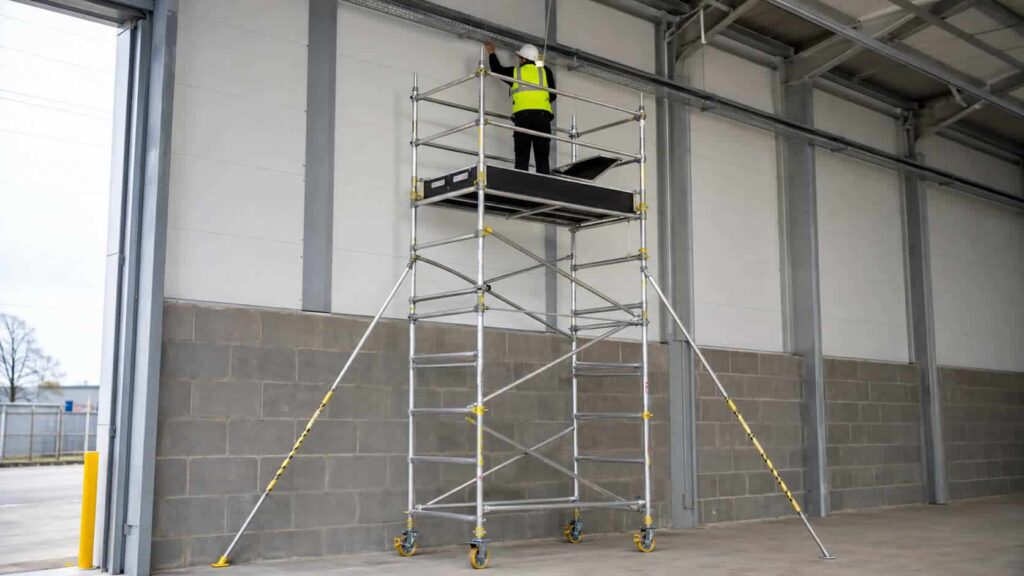
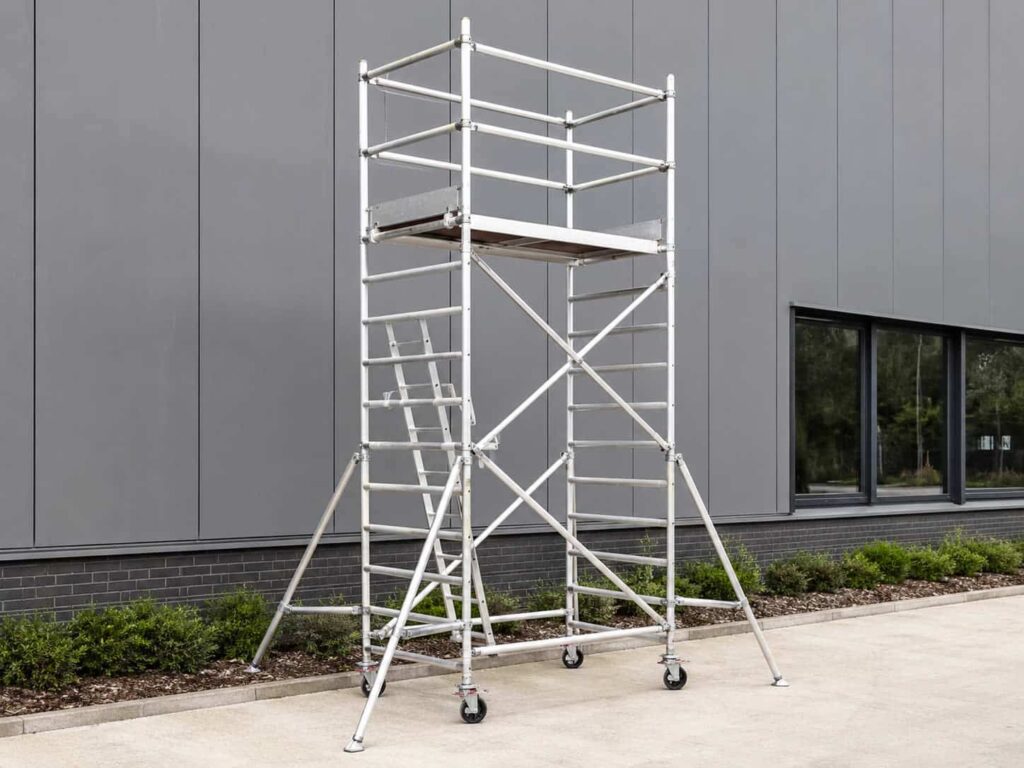
Not every job needs fixed scaffolding. In some cases, mobile scaffold towers or MEWPs (Mobile Elevated Work Platforms) are better suited. Especially if you’re working at multiple points or the surface below is uneven.
But just like with scaffolding, these still need proper training and setup. You can’t just hire a tower and guess your way through it. Most accidents involving mobile towers happen when people either overreach, forget to lock the wheels, or use them on a slope.
Is scaffolding a legal requirement for domestic jobs?
If you’re a homeowner doing DIY work on your own property, technically, the Work at Height Regulations don’t apply in the same way as they would for a contractor. But that doesn’t mean you should ignore safety. If a friend’s helping you or if anyone gets hurt, you’re responsible.
If you hire tradespeople — builders, roofers, painters — then it’s their duty to make sure the job’s done safely. And that usually means bringing in scaffolding when the work is over 2 metres or involves complex access.
Who decides if scaffolding is required?
It all comes down to the risk assessment. If you’re a professional contractor, you must carry one out before any work at height begins. If you’re a homeowner hiring someone, ask them about it. A reputable company will have no problem explaining what they’re doing and why.
The assessment should cover:
- How long the job will take
- What tools or materials will be carried
- What kind of platform is safest
- The weather forecast
- Site access and ground conditions
If the risk can’t be managed with other measures, scaffolding becomes the safest and most responsible option.
Do I need a permit for scaffolding?
Sometimes. If the scaffolding is being set up on a public pavement or road, then you’ll need a permit from the local council. That’s the law. The scaffolding company usually sorts this out for you, but it’s worth checking they’ve applied for it.
If it’s on your own land (say, your driveway or garden), you don’t need a permit — but you do still need to follow safety regulations.
How can you tell if scaffolding has been set up safely?
It should be done by a competent person — either a CISRS-qualified scaffolder or someone with similar training. Look out for:
- Guard rails and toe boards in place
- Secure access ladders or stairs
- Properly spaced boards with no gaps
- Stable base with firm footing
- Tags showing when the scaffold was last inspected
Scaffolding should be checked:
- Before first use
- After any alterations
- After severe weather
- At least every 7 days
You’ve got every right to ask for proof of inspection if you’re unsure.
What happens if you don’t use scaffolding when it’s needed?
If you’re running a site and fail to provide scaffolding when required, you could face serious consequences:
- Prosecution by the HSE
- Fines running into thousands
- Injuries or even fatalities
- Claims from injured workers or the public
Even if you’re a homeowner, if someone’s hurt on your property, you could still be held accountable. It’s just not worth the risk.
What are the benefits of using scaffolding?
Apart from compliance, there are real advantages that make your life easier:
- Safety – First and foremost, it reduces the chance of falls.
- Efficiency – Workers can move faster and more confidently.
- Access – You can reach areas that a ladder simply can’t.
- Tool use – You’ve got both hands free, and there’s room to place tools and materials.
- Better results – Especially for painting, plastering, or roofing — scaffolding gives you a stable base to work from, which shows in the finish.
What should you do if you’re not sure?
If you’re hesitating, it usually means you should err on the side of caution. You can always:
- Speak to a local scaffolding company
- Ask for a quote and risk assessment
- Check the HSE guidance online
It’s better to make an informed choice than to rush a job and regret it.
Final thoughts — What should you take away?
If you remember one thing, let it be this: there’s no minimum legal height for needing scaffolding, but if there’s any chance of a fall causing injury, you need to make the job safe. In most cases, that means scaffolding when you’re above 2 metres.
Don’t gamble with safety — not for yourself, not for your workers, not for your property. And if you’re unsure, always get advice from someone qualified. The cost of scaffolding is nothing compared to what an accident could cost you.
If you’ve got a job coming up and want to know whether you need scaffolding, it’s always worth getting a professional opinion. Feel free to get in touch with your local scaffolder and ask them to walk you through it. They’ll know exactly what’s needed and why.