Wind gusts can reach speeds up to 40% stronger than average wind conditions, making them a significant safety concern for scaffolding operations. While there is no universal maximum wind speed limit for elevated work, different scaffolding systems have specific thresholds: 25 mph for two-point systems and 20 mph for single-point systems.
Safety guidelines vary among different authorities. The Health and Safety Executive (HSE) indicates that wind speeds exceeding 23 mph can impact a worker’s balance. At the same time, OSHA regulations mandate additional safety measures, such as windscreens or personal fall arrest systems, when working in winds above 20 mph.
These operations may only continue when a qualified person has assessed the conditions and deemed them safe. Understanding these crucial safety parameters can help determine when it is appropriate to proceed with or halt scaffolding work due to wind conditions.
Understanding Maximum Wind Speed Limits for Scaffolding Safety
Working safely at height requires a precise understanding of how wind affects scaffolding stability. Meteorological measurements provide essential data for making sound safety decisions before anyone steps onto a scaffold platform.
The Beaufort Wind Force Scale and Scaffolding Operations
The Beaufort scale offers a practical way to assess wind conditions without specialised equipment. This scale correlates observable effects with wind speeds:
- Force 0-3 (0-12 mph): Generally safe for all scaffolding operations
- Force 4 (13-18 mph): Dust and loose paper raised; small branches begin to move
- Force 5 (19-24 mph): Small trees sway; balance becomes compromised
- Force 6 (25-31 mph): Large branches move; whistling in phone wires; umbrellas become challenging to use
When conducting scaffolding work, I always observe these physical indicators alongside formal measurements to maintain safety standards.
UK HSE Guidelines: 23 mph as the Critical Threshold
The Health and Safety Executive (HSE) sets the critical threshold for scaffolding work at 23 mph (10.3 m/s). Winds exceeding this speed can significantly impact a worker’s balance, making it unsafe to continue. According to the Work at Height Regulations 2005, companies are required to ensure that weather conditions are suitable for work at height.
While some sources may suggest varying limits between 18 and 40 mph, the HSE’s guideline of 23 mph remains the authoritative standard for scaffolding operations in the UK. Continuously monitoring wind speeds is essential, and work should stop immediately if this threshold is exceeded.
OSHA Standards: 20 mph and Required Safety Measures
The Occupational Safety and Health Administration (OSHA) sets slightly stricter guidelines, requiring additional safety measures when winds exceed 20 mph. Expressly, elevated work operations in such conditions must incorporate:
- Windscreens to reduce lateral forces
- Personal fall arrest systems (PFAS)
- Approval from a qualified person who determines conditions remain safe
OSHA further mandates that hoisting operations cease at 20 mph unless explicitly approved by supervisors.
International Variations in Wind Speed Regulations
Maximum wind speed regulations vary globally, reflecting different risk assessments and safety cultures. Generally accepted limits include:
- 25 mph (40 kph) for two-point scaffolding systems
- 20 mph (32 kph) for single-point scaffolding systems
Wind tolerance is also affected by temperature. For example, when temperatures drop below -25 to -29 degrees Fahrenheit, work should be halted if wind speeds reach 20 mph or higher.
In various jurisdictions, the responsible individual must assess wind conditions and other environmental factors before allowing work to continue or deciding to stop operations.
How Different Scaffolding Types Respond to Wind Forces
Not all scaffolding structures behave the same way when exposed to wind forces. The design, configuration, and application of different scaffolding types significantly affect their stability in windy conditions.
Tube and Fitting Scaffolding Wind Resistance (Up to 25 mph)
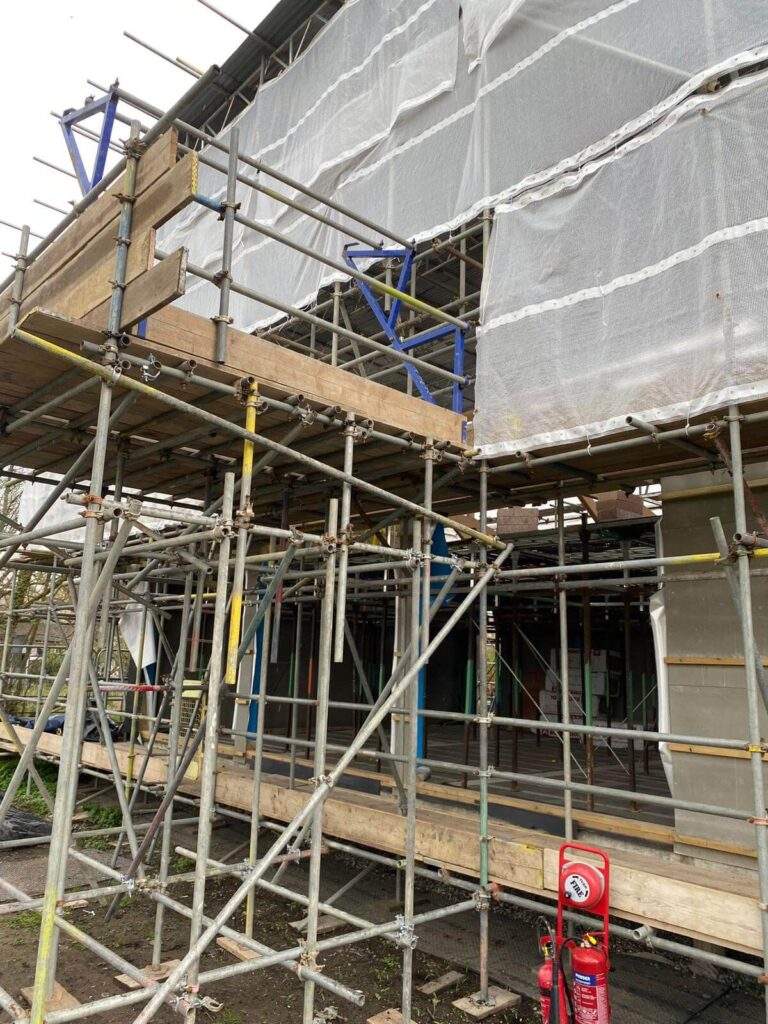
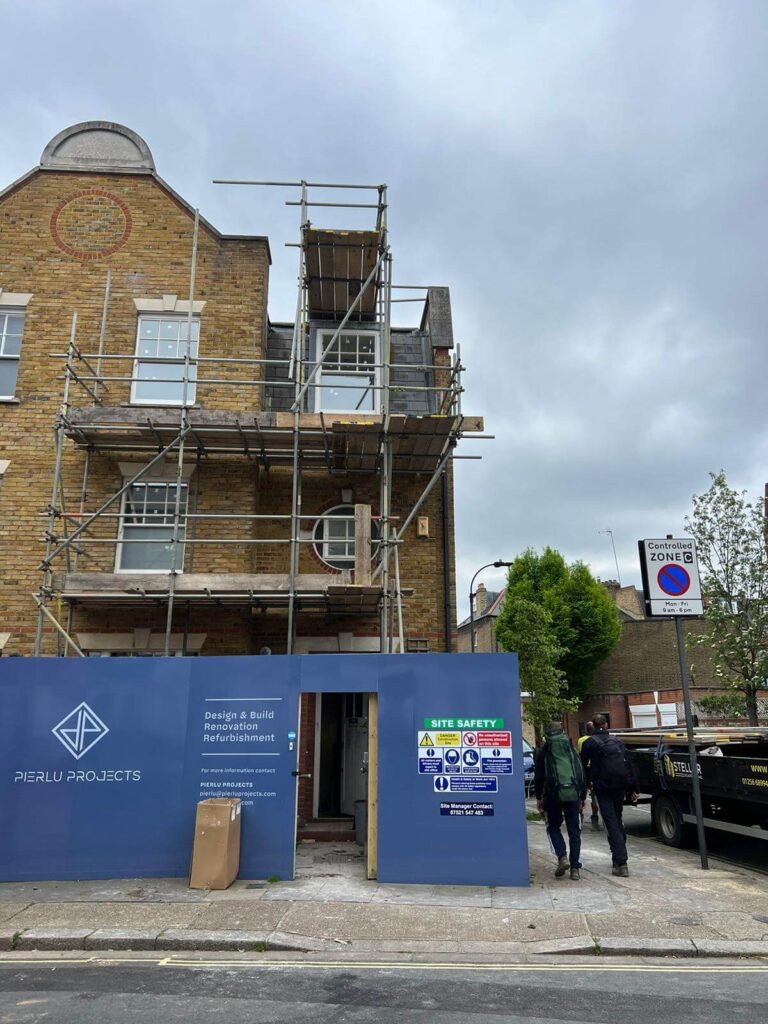
Tube and fitting scaffolds must comply with recognised standard configurations, such as those specified in the National Access and Scaffolding Confederation (NASC) document TG20 Volume 1. These traditional systems typically exhibit strong resilience against wind forces.
Double scaffolding, which consists of two rows of vertical standards, provides greater stability than single configurations. The inner standards are positioned close to the wall, while the outer row is placed at a strategic distance, creating a robust structure that can withstand strong winds and harsh weather conditions.
As a result, tube and fitting scaffolds are generally stable in winds up to 25 mph, provided they have been properly erected. However, studies show that around 10% of scaffold collapses are caused by strong winds. A well-constructed scaffold should remain standing during stormy conditions.
System Scaffolding Performance in High Winds
The behaviour of system scaffolding in response to wind pressures varies based on its configuration. Research indicates that while building openings and scaffolding shapes have minimal impact on pressures on outer surfaces, the wind pressures on inner surfaces are vital for determining the overall loads on clad scaffolding.
Typically, the highest local peak net pressure coefficient occurs in the upper sections of the scaffolding. Additionally, wind load increases when influenced by oblique wind. In the case of cantilevered scaffolding systems, especially those used in high-rise construction, the wind load transmitted to the connecting tubes can sometimes exceed established normative limits.
Mobile Tower Scaffolds: Lower Wind Speed Tolerances
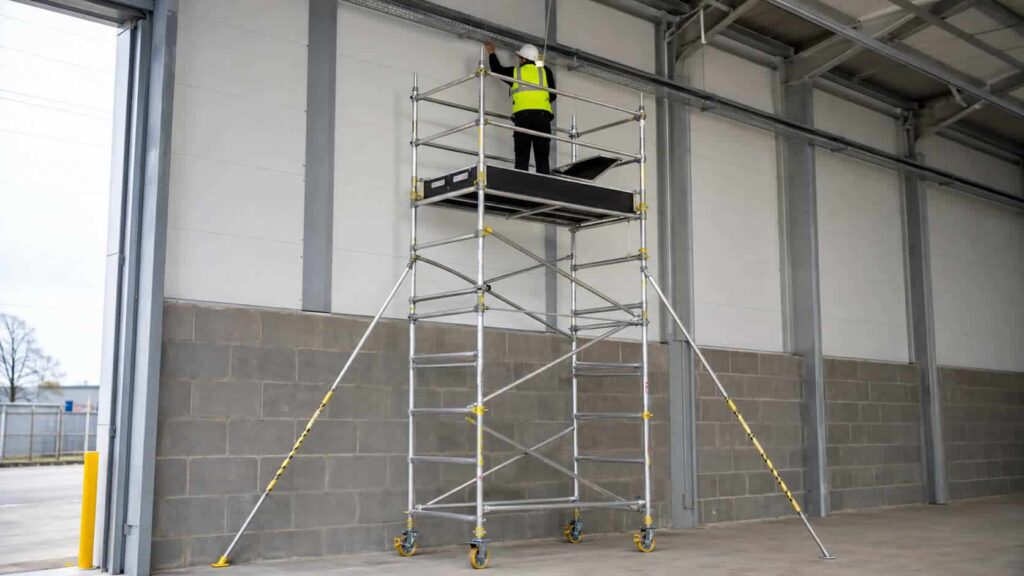
Mobile access towers have considerably lower wind speed tolerances. PASMA guidelines clearly state that if the average wind speed reaches 17 mph (Beaufort 4), work must cease, and the tower should be dismantled. Throughout use, wind speeds must be monitored using a hand-held anemometer.
Mobile towers require particular attention regarding:
- Location considerations (funnelling effects between buildings can increase wind speed)
- Surrounding terrain impacts (hilltops, slopes, and coastal areas experience higher winds)
- Height factors (wind speeds at elevation may be considerably higher than ground level)
If wind speeds approach 25 mph, the tower must be adequately tied to a suitable adjacent rigid supporting structure. At 40 mph, complete dismantling becomes mandatory.
Technical Monitoring and Assessment of Wind Speed on Site
Accurate monitoring of wind conditions is essential for scaffold safety. It requires both appropriate equipment and proper interpretation of meteorological data.
Anemometer Types and Proper Placement on Scaffolding
Several anemometer varieties exist to measure wind speed on scaffolding sites:
- Cup anemometers: The most straightforward type featuring three spinning cups mounted on a pole, transferring airflow speed to a digital readout
- Vane anemometers: Also known as propeller or windmill anemometers, these use wind blades instead of cups
- Hotwire anemometers: Measure both wind speed and pressure
- Ultrasonic anemometers: Send sonic pulses across a path, primarily used in aircraft and wind turbines
Anemometers should be placed in the middle of the scaffolding deck for effective monitoring. Since wind speed increases with altitude, attaching an anemometer to the boom point allows monitoring at operating heights.
Digital Wind Monitoring Systems with Alert Capabilities
Modern wind monitoring systems offer advanced safety features beyond basic measurements. Professional weather stations transmit real-time data to the cloud, enabling remote site monitoring with customisable alarm settings. These systems alert managers when wind speeds approach dangerous thresholds—vital information since local wind patterns can create dangerous gusts even when forecasts predict moderate winds.
Connected scaffolding systems incorporate sensors that detect changes in wind speed, vibration, and weight distribution. This data feeds into analysis software that generates immediate alerts when unsafe conditions develop, allowing construction managers to take prompt action.
Interpreting Weather Forecasts for Scaffolding Work Planning
Examining weather forecasts is crucial for risk assessment prior to erecting any scaffold. Nevertheless, weather forecasts provide only general wind conditions and cannot reflect site-specific situations affected by terrain features and surrounding structures.
For coastal regions, staying vigilant during storm seasons (June through November) is particularly important. Likewise, monitoring weather during scaffold use with handheld wind devices prevents situations where workers might be caught in suddenly deteriorating conditions.
Ultimately, combining meteorological forecasts with on-site monitoring creates the safest approach to scaffold work planning.
Our Final Say!
Safety remains paramount when working with scaffolding systems under varying wind conditions. Through my extensive research and analysis, wind speeds between 20 and 23 mph emerge as critical thresholds that demand immediate action. These limits, established by HSE and OSHA, reflect careful consideration of worker safety and structural stability.
Different scaffolding types display unique responses to wind forces. Tube and fitting scaffolds show resilience up to 25 mph, while mobile towers require stricter limits around 17 mph. Wind load calculations prove essential, especially considering height variations and the substantial impact of sheeting or netting on structural stability.
Accurate wind monitoring stands as a crucial safety measure. Modern digital systems with alert capabilities offer real-time data, allowing quick responses to changing conditions. Weather forecasts, combined with on-site measurements using properly placed anemometers, create a comprehensive safety approach.
Professional scaffolding work demands strict adherence to these wind speed guidelines. Understanding and respecting these limits, alongside proper structural calculations and monitoring systems, helps prevent the estimated 10% of scaffold collapses attributed to wind forces. This knowledge ensures both worker safety and project success.
If you are searching for Scaffolders in Southampton and surrounding areas, contact Stellar Scaffolding for more information.