
Scaffolding Reading
Scaffolding Reading – Safe Access for Homes, Commercial Sites and Development Work
Scaffolding in Reading needs to support a wide mix of building projects, from residential roof repairs and extensions through to commercial refurbishments, industrial maintenance and larger contractor-led schemes. Stellar Scaffolding provides carefully planned scaffold access for homeowners, landlords, builders, developers and site managers who need safe working platforms without unnecessary disruption.
Reading has a varied property landscape. Period terraces, suburban homes, apartment blocks, offices, retail premises, warehouses, schools, healthcare buildings and new developments all create different access demands. A scaffold for a small chimney repair in Caversham is not the same as a scaffold for a commercial façade project near the town centre or a multi-trade construction job on a busier site.
The right scaffold gives trades the confidence to work at height safely while helping the project stay organised. It also protects the building, the people using the site and anyone passing nearby.
A well-planned scaffold can help with:
- Stable working platforms — Roofers, decorators, brickwork teams and maintenance contractors can work from boarded lifts rather than relying on unsuitable access.
- Clear route planning — Access ladders, loading points and working areas can be positioned around the way the site will actually be used.
- Reduced disruption — Occupied homes, commercial premises and managed buildings need scaffold layouts that respect entrances, parking, deliveries and neighbouring properties.
- Safer public interfaces — Where scaffold sits near pavements, car parks, schools, shops or shared routes, protection and clear boundaries become especially important.
- Better trade coordination — Larger projects often involve several contractors, so scaffold access needs to support sequencing rather than slow the job down.
For projects where safe movement around the building is just as important as working height, Stellar Scaffolding can provide access walkways for safer movement around active sites, helping trades reach the right areas without creating unnecessary risk.
Professional Scaffolding Services in Reading
Our scaffolding services in Reading are designed around the building, the working height, the access available and the type of trade using the structure. Some jobs need a compact front elevation scaffold for roofline work, while others need a more detailed system with returns, bridging, loading points, protective sheeting or phased adaptations.
Before scaffold is installed, the site needs to be assessed properly. Ground conditions, vehicle access, overhead obstructions, neighbouring boundaries, public routes and the condition of the building can all affect the safest way to build the structure.
Typical scaffolding requirements in Reading include:
- Roof access scaffolds — Safe platforms for roof repairs, tile replacement, leadwork, guttering, fascias, soffits, chimneys and dormer work.
- External refurbishment scaffolding — Access for painting, rendering, repointing, façade cleaning, window replacement and masonry repairs.
- Commercial access scaffolding — Structures for offices, shops, leisure premises, industrial units and mixed-use buildings where work needs to be controlled around daily activity.
- Residential extension scaffolds — Support for builders working on side extensions, rear extensions, loft conversions and major home improvement projects.
- Temporary protection — Weather, dust, falling materials and vulnerable areas can be managed more effectively when the scaffold includes the right protective features.
- Specialist site support — Where access is complex, hoist gantries for safer material lifting can help move loads efficiently on more demanding building projects.
A reliable scaffold should make the job easier to carry out, not just meet the minimum need for height access.
Scaffold Access for Reading’s Different Building Types
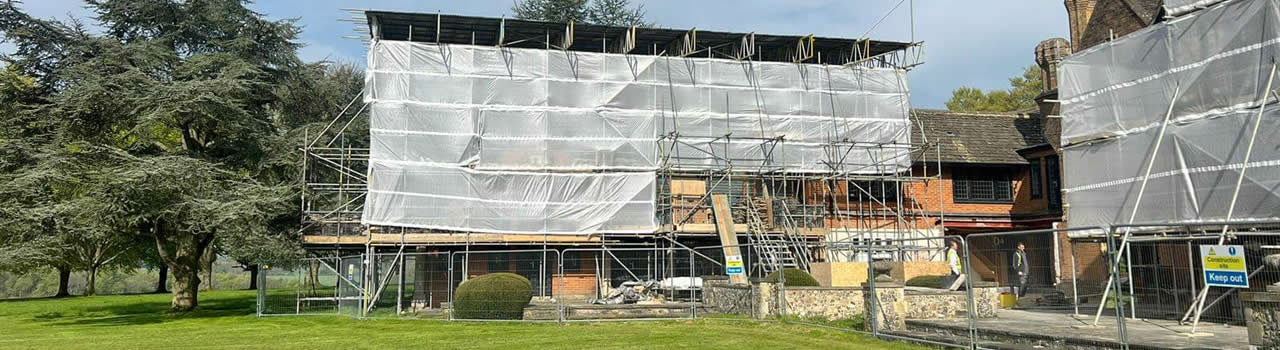
Reading projects can vary significantly from one street to the next. A scaffold may be needed for a semi-detached home, a riverside apartment block, a business park unit, a school building, a shopfront, a hotel, a warehouse or a new-build development. Each setting changes how the scaffold should be designed and managed.
Residential jobs often focus on safe access with minimal disruption to daily life. Commercial and industrial jobs may need stronger attention on loading, vehicle movement, out-of-hours work, site segregation and coordination with other contractors. Managed buildings may also require careful resident communication and safe access to communal entrances.
Important project considerations include:
- Working height and platform position — The scaffold needs to put trades at the correct level for the task, whether that is a roof edge, chimney, gable, façade or upper window line.
- Ground and surface conditions — Driveways, paved areas, soft ground, car parks and public footpaths all affect how loads are spread and how standards are positioned.
- Occupied building access — Homes, offices and blocks of flats may need routes kept clear so people can continue using the building safely.
- Public and vehicle movement — Sites close to roads, schools, retail areas or car parks may need extra protection and clearer exclusion zones.
- Programme changes — Longer projects may require scaffold adaptations as roofers, builders, window teams and finishing trades move through different stages.
For projects involving older or more sensitive buildings, scaffolding for heritage and listed building work can help provide access while giving careful consideration to delicate façades, historic features and restricted fixing points.
Choosing the Right Scaffold Setup for the Job
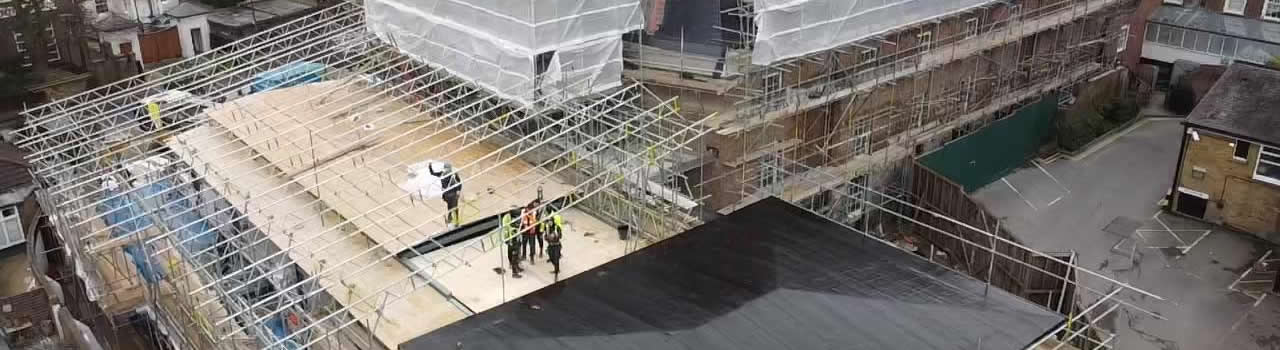
The right scaffold setup depends on the work being carried out and the restrictions around the site. A straightforward elevation scaffold may be enough for painting or gutter repairs, while roof replacement, façade restoration, solar installation or major refurbishment may call for a more detailed structure.
A good scaffold plan should take account of how materials will be handled, where trades will stand, how often the structure will be used, how long it will remain in place and whether extra protection is needed below.
Common scaffold options include:
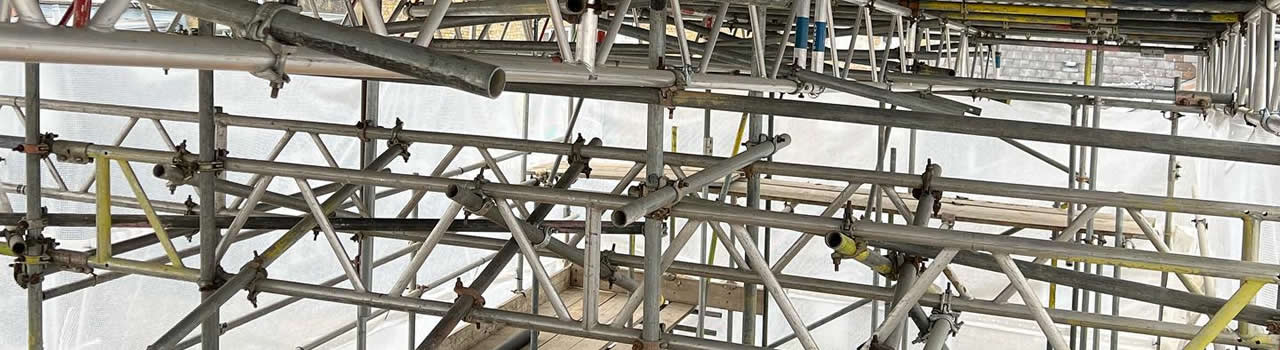
- Independent scaffolding — Suitable for many external repairs, roofline works, painting, repointing, rendering and window replacement projects.
- Mobile scaffold towers — Useful for smaller maintenance tasks, inspections or short-duration works where the surface and working conditions are suitable.
- Birdcage scaffolding — Often used for internal ceiling access, large halls, atriums, voids and areas where a broad working platform is required.
- Cantilever scaffolding — Helpful where standards cannot be placed directly below the work due to obstacles, lower roofs, access routes or restricted ground space.
- Temporary roof structures — Useful where roof coverings are removed or weather-sensitive work needs protection while the building is exposed.
- Crash decks — Where internal or overhead work creates fall risks, scaffolding crash decks for safer fall protection can provide a protective working or safety platform.
A scaffold should always be selected because it suits the building and work activity, not because it is the quickest default option.
Residential Scaffolding for Reading Homes
Homeowners in Reading often need scaffolding for repairs, maintenance and improvement work that cannot be completed safely from ladders. Roofers, decorators, window installers and builders need secure platforms, especially when work takes place for more than a short inspection or involves materials being handled at height.
Residential scaffold design should consider the people living in the property. Driveways, gates, side access, front doors, gardens, neighbouring boundaries and lower roof areas all need to be protected where possible. A well-planned scaffold helps trades work safely without making the home unnecessarily difficult to use.
Common domestic scaffolding uses include:
- Chimney repairs — Safe access for repointing, flaunching, flashing work, pot replacement and stack inspections.
- Roof replacement and repair — Platforms for tile removal, slate work, roofline repairs, valley work, fascia replacement and gutter access.
- Loft conversions — Scaffold support for dormer construction, roof alterations, window fitting and external finishing work.
- Exterior decorating — Safer access for painting, render repair, timber treatment and upper-level finishing work.
- Window and façade work — Stable platforms for glazing, sealant work, brick repairs, cladding and external inspection.
- Garage and lower roof obstacles — Where work takes place above a garage or extension, scaffolding over garages for awkward roof access can help protect lower structures while giving trades the height they need.
Residential scaffolding should feel organised from the beginning, with clear installation timings, sensible access arrangements and a safe structure for every trade using it.
Scaffolding for Contractors, Commercial Sites and Industrial Work
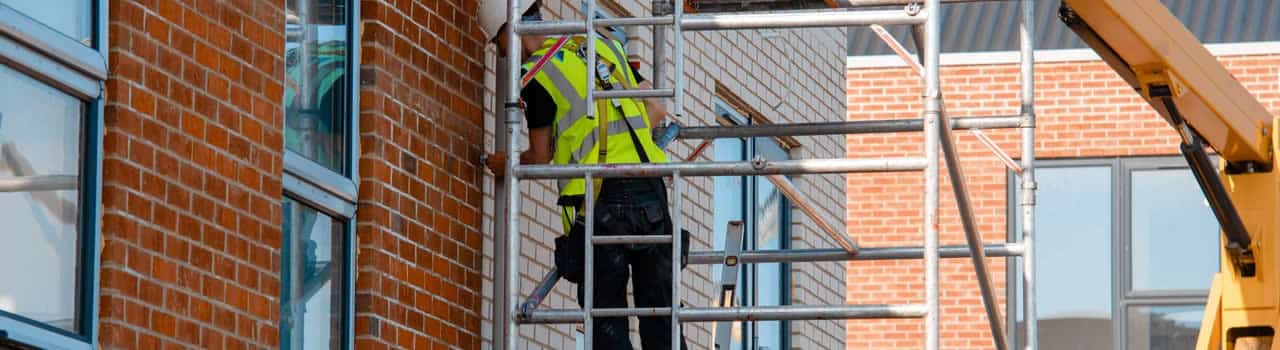
Reading has a strong mix of commercial, office, education, retail and industrial sites, so scaffold access may need to support more than a single trade. Contractors may need scaffolding for façade repairs, roofing, external plant access, M&E works, cladding, signage, inspection, refurbishment or structural upgrades.
On commercial projects, scaffold design should support productivity while keeping staff, visitors, customers and other contractors safe. This often means clearer segregation, planned loading, protected access routes and communication around installation, adaptations and dismantling.
Scaffolding can support:
- Office and retail refurbishment — Safe access for upper elevations, signage, glazing, cladding, roofline repairs and external decoration.
- Industrial maintenance — Stronger access arrangements for warehouses, plant areas, service routes, loading zones and high-level maintenance.
- Education and public buildings — Planned scaffold access for roof repairs, window work, façade repairs and cyclical maintenance.
- Development sites — Larger structures that can adapt as brickwork, roofing, windows and finishing trades move through the programme.
- Demolition preparation — Access, containment and protection for early enabling works, strip-out and staged dismantling activity.
- Specialist environments — Where the project involves sensitive equipment or controlled spaces, data centre scaffolding for controlled technical environments can support safe access with added attention to site discipline.
For builders and commercial clients, good scaffolding planning keeps access aligned with the work programme instead of forcing trades to compromise around poor platform positions.
How Scaffolding Is Installed Safely
Safe scaffold installation starts with a site assessment. The scaffold team needs to understand the building, the work being carried out, the ground conditions, the safest access route for materials, the intended loads and any hazards nearby. This is especially important where scaffolding is close to a road, car park, public entrance, school route or occupied commercial building.
After the survey, the scaffold layout is planned around platform heights, access points, bracing, ties, loading, board arrangements and protective features. If the work involves heavier materials, multiple trades or public-facing elevations, the structure may need additional consideration before installation begins.
During erection, trained scaffolders build the structure in a controlled sequence so that every lift is properly supported and safe before the next stage progresses. Guardrails, toe boards, boards, ladders and ties are installed as required, and the finished scaffold is checked before being made available for use.
A scaffold should only be altered by competent scaffolders. If trades need a platform adjusted, a lift changed or an access point moved, that work should be arranged properly rather than carried out informally on site.
Scaffolding Safety Inspections and Regulations
Scaffolding must remain safe for the full hire period. Weather, use by multiple trades, stored materials, accidental knocks, site changes and unauthorised alterations can all affect the structure, so inspection is an important part of scaffold management.
A scaffold should be inspected before first use, then regularly while it remains in place. Additional checks are required after significant weather, after any modification and after anything that could affect stability or safe access.
Inspections should look at the overall structure as well as practical details such as boarded platforms, ties, bracing, access ladders, toe boards, guardrails, foundations, loading and signs of damage. On commercial or public-facing sites, inspection discipline is especially important because more people may be affected by a scaffold issue.
Reliable scaffold inspection helps homeowners, contractors and site managers keep the project moving safely.
How Scaffolding Is Installed Safely
Choosing a scaffolding company in Reading should involve more than comparing the fastest start date. The scaffold affects safety, access, productivity, property protection and the way the whole project runs, so the company needs to understand the building and the practical demands of the job.
A dependable scaffolding contractor will ask about the type of work, the trades involved, how long the scaffold is needed, whether the site is occupied, how materials will be handled and whether there are public routes or vulnerable areas nearby. These details help shape a safer and more useful structure.
When arranging scaffold hire, consider:
- Survey detail — A proper site review helps identify loading needs, access restrictions, ground issues and protection requirements before installation.
- Experience with similar projects — Domestic roof work, commercial refurbishment and industrial access all require different scaffold planning.
- Clear scheduling — Installation, adaptations, inspections and dismantling should be communicated properly so the project can be organised around them.
- Safety standards — The scaffold should include suitable boards, guardrails, toe boards, ties, bracing and access routes for the intended use.
- Adaptability — Longer projects may need changes as trades move through different phases of the job.
- Protection measures — Vulnerable surfaces, public areas, neighbouring buildings and lower roofs should be considered before scaffold materials arrive.
Benefits of Hiring Professional Scaffolders in Reading
Professional scaffolders help reduce risk, improve access and make building work easier to manage. Instead of relying on ladders or improvised solutions, trades can work from platforms designed for the task. This improves safety and often improves the quality of the finished work because workers can stand, move and handle tools properly.
A well-planned scaffold also helps protect the wider site. Reading projects may involve occupied homes, busy commercial premises, schools, managed blocks or active construction sites, so safe separation and practical access are important.
The main benefits include:
- Safer work at height — Stable platforms, guardrails and correct access points reduce unnecessary risk for tradespeople.
- Improved project efficiency — Workers can reach the right areas faster and carry out tasks without constant access problems.
- Better material handling — Loading areas and scaffold platforms can make it safer to move tools, windows, roof materials and repair supplies.
- Reduced property damage risk — Careful planning helps protect driveways, lower roofs, shopfronts, windows, walls, paving and neighbouring structures.
- Support for complex sites — Public-facing, commercial or multi-trade jobs can be managed with clearer access and protection.
- Flexible access for changing works — If the project develops, scaffold adaptations can keep the structure useful as the job progresses.
Frequently Asked Questions About Scaffolding Reading
What types of projects need scaffolding in Reading?
Scaffolding is commonly used for roof repairs, chimney work, loft conversions, exterior painting, rendering, window replacement, commercial refurbishment, industrial maintenance and development projects. Any job that requires safe, repeated or material-heavy access at height may need scaffold rather than ladders.
Can scaffolding be installed around an occupied home or business?
Yes. Scaffolding can often be installed while a building remains occupied, but access routes, entrances, deliveries, parking, residents, staff and visitors need to be considered during planning. The scaffold should be arranged to keep essential movement as safe and practical as possible.
How long can scaffolding stay in place?
Scaffolding can remain in place for the length of the project as long as it is inspected and maintained properly. Hire periods are usually arranged around the expected programme, but it is sensible to allow some flexibility for weather, trade delays or additional works.
Get a Free Quote for Scaffolding in Reading
If you need scaffolding in Reading for home repairs, commercial work, industrial maintenance, refurbishment, roofing or construction, Stellar Scaffolding can help plan safe access around your building and project requirements.
A properly designed scaffold gives tradespeople safer working platforms, helps protect the site and makes the job easier to coordinate from installation through to dismantling.
Contact Stellar Scaffolding to arrange a site survey and request a clear quote for scaffolding in Reading.
What Areas Do We Cover in and Around Reading?
While we provide scaffolding in Reading, we also cover nearby towns and areas across Berkshire and the surrounding region, including:
Caversham
Tilehurst
Woodley
Earley
Wokingham
Bracknell
Maidenhead
Henley-on-Thames
Pangbourne
We’re responsive, practical and ready to support homeowners, contractors, commercial sites and managed properties across the local area.